





Introduction
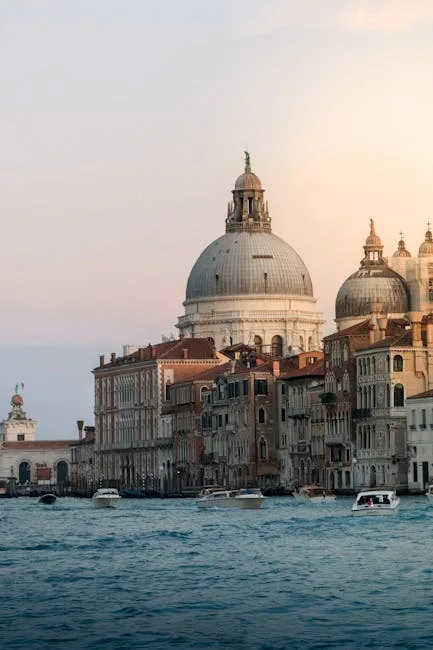
Venice is not just a city of history and romance: for design lovers, it’s a living laboratory where centuries-old craftsmanship, Renaissance architecture, contemporary avant-garde and glassmaking expertise meet. Getting lost in the calli and over the ponti of La Serenissima means studying carefully proportioned façades, subtle ironwork, and palazzo interiors turned into galleries that trace the evolution of European taste. Over five days you can put together an itinerary that blends modern art and design museums, glass workshops in Murano, local designer boutiques, and stops in historic cafés where the decor itself is worth attention.
This 5-day guide is designed for travelers who want to deeply understand the relationship between form, material and function in Venice: how glass shaped an island economy; how private collections like the Peggy Guggenheim Collection redefined the museum landscape; how places such as Palazzo Fortuny convey a taste for theatre and scenography. Each day balances museum visits, inspiring walks, observation moments and practical suggestions (exact addresses, opening hours, indicative prices, transport and booking tips). You’ll find recommendations to optimize your photos, spot the best viewpoints in morning or evening light, and how to talk with artisans without disrupting their workshops.
Venice requires time and slowness: distances may seem short, but walking often involves winding alleys and bridges. It’s essential to plan around opening hours, possible closed days and the season (summer high season versus quieter shoulder seasons). Finally, if design is your through-line, this route favors studying materials — glass, lacquer, marble, tapestries — and contemporary, local responses to conservation and sustainability challenges. Bring a notebook or a charged smartphone: Venice is full of details to study, and each day offers visual discoveries that will feed your creative projects.

Day 1 — Dorsoduro and museum modernity: Peggy Guggenheim, Punta della Dogana and independent galleries
Start your dive into Venetian design in the Dorsoduro neighborhood, a hub of modern art museums and spaces where scenography is itself a study subject. Your first unmissable stop is the Peggy Guggenheim Collection housed in the Palazzo Venier dei Leoni at Dorsoduro 701-704, 30123 Venezia (VE). Opening hours: generally open daily from 10:00 to 18:00 (last entry 17:30). Price: around €16 for an adult ticket (reduced rates available). The collection gathers works by Picasso, Pollock, Kandinsky and other key figures: the hang emphasizes spatial experience, dialogues between sculpture and furniture, and the direct view of the Grand Canal from the palace garden — a space for contemplative design. Allow 1.5 to 2 hours for a careful visit.
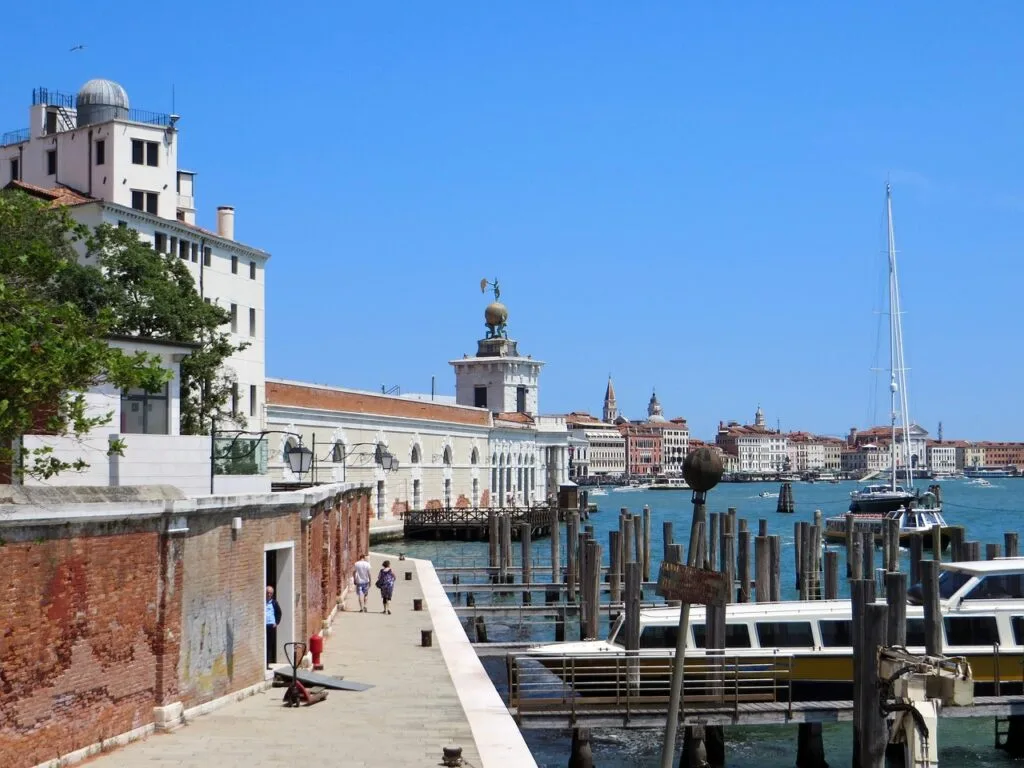
On foot (10 min), head toward the Punta della Dogana (Fondamenta Punta della Dogana, Dorsoduro 2, 30123 Venezia), a contemporary art center housed in the old customs building. Opening hours: generally 10:00 – 19:00. Price: temporary exhibitions often around €14 (check the website for major shows). The building itself is a lesson in adaptive architecture: vast spaces, sun-shading elements and panoramic views over the basin of San Marco. Each room features minimalist scenography that highlights installations and large-scale sculptures.
In the afternoon, wander through the small independent galleries in the neighborhood: Galleria Michela Rizzo (Dorsoduro) and pop-up spaces that showcase contemporary furniture design and objects by Venetian artisans. Typical address: Galleria Michela Rizzo, Dorsoduro 942, 30123 Venezia (hours vary, generally 11:00-19:00). These galleries are great for seeing how young creators reinterpret local techniques. At the end of the day, have an aperitivo at the Skyline Rooftop Bar (Hilton Molino Stucky) for lagoon views: Giudecca 810, 30133 Venezia. Opening hours: often 12:00 to 00:00, cocktails roughly €12-18.
Practical tips: book Peggy Guggenheim tickets online in high season to skip the line; bring a small flashlight to appreciate textures in dim galleries; favor morning light for exterior photography at Punta della Dogana where low-angle light enhances volumes.
 Click here to book your skip-the-line ticket for the Peggy Guggenheim Collection
Day 2 — Glass and Murano: factories, Museo del Vetro and contemporary studios
No design-focused stay in Venice is complete without time on Murano, the island of blown glass. Take the vaporetto (ACTV lines 4.1/4.2/3 depending on departure) from Fondamenta Nove or other stops: a single ACTV ticket costs about €8 for 75 minutes (check updated fares when buying). Destination: the Museo del Vetro at Fondamenta Giustinian, 8, Isla di Murano, 30141 Venezia (sometimes listed as Fondamenta Donà). Opening hours: generally 10:00 – 17:00; price: around €10.
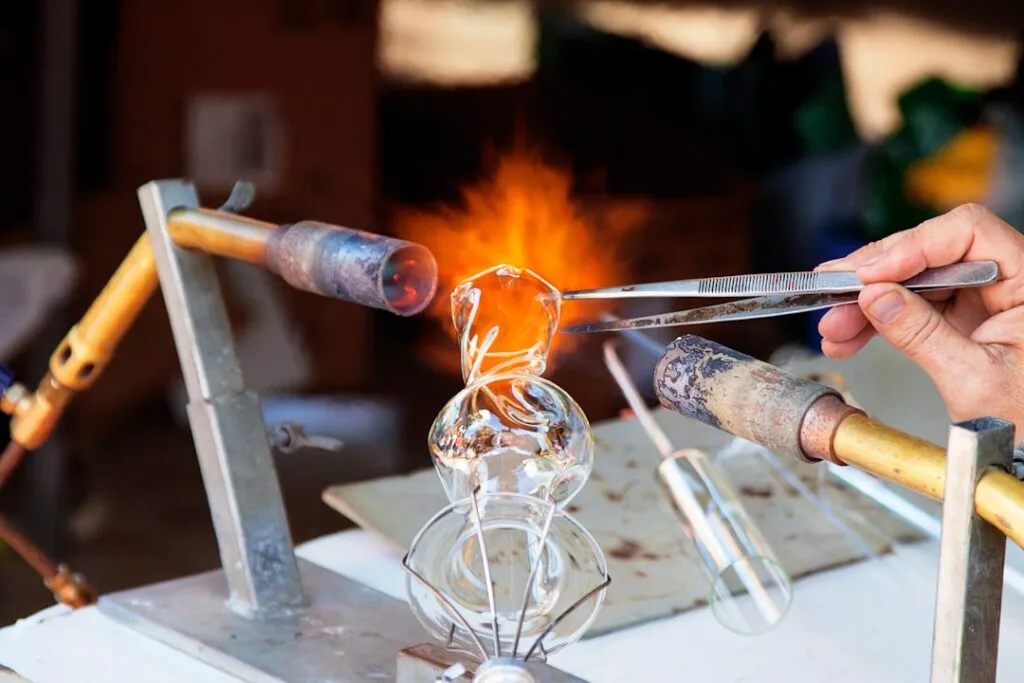
The museum traces the evolution of glass techniques from the Roman era to contemporary pieces. Displays include beads, mirrors, vases and works by master glassmakers like Barovier & Toso and Seguso. Nearby, many private workshops offer glassblowing demonstrations. Recommendation: choose a traditional atelier like the Venini Showroom (Fondamenta dei Vetrai, Murano — address may vary; better to check locally) for a demo followed by a shop visit. Public demonstrations are often free but booking a private workshop can cost between €50 and €120 depending on duration.
Click here to book a glassblowing workshop in Murano
Click here to book a boat tour, demonstration and factory visit in Murano
Walking along the calli, look out for contemporary glassmakers experimenting with color and texture. To deepen your knowledge, visit the Fondazione Musei Civici di Venezia – Palazzo Mocenigo (if your interest leans toward textiles and decoration), or head back to central Venice to see design studios inspired by glass techniques. Suggested lunch: a small Osteria on Murano for fresh fish dishes (budget €15-25 per person).
Practical tips: bring comfortable shoes and a light jacket — workshops can be hot and the exterior contrast can be strong. If you plan to buy glass pieces, request a certificate of authenticity and secure packaging for air travel. Also check the vaporetto departure times for the last boats back to Venice in the evening.
Day 3 — Architecture, scenography and interiors: Palazzo Fortuny, Ca’ Pesaro and design shops
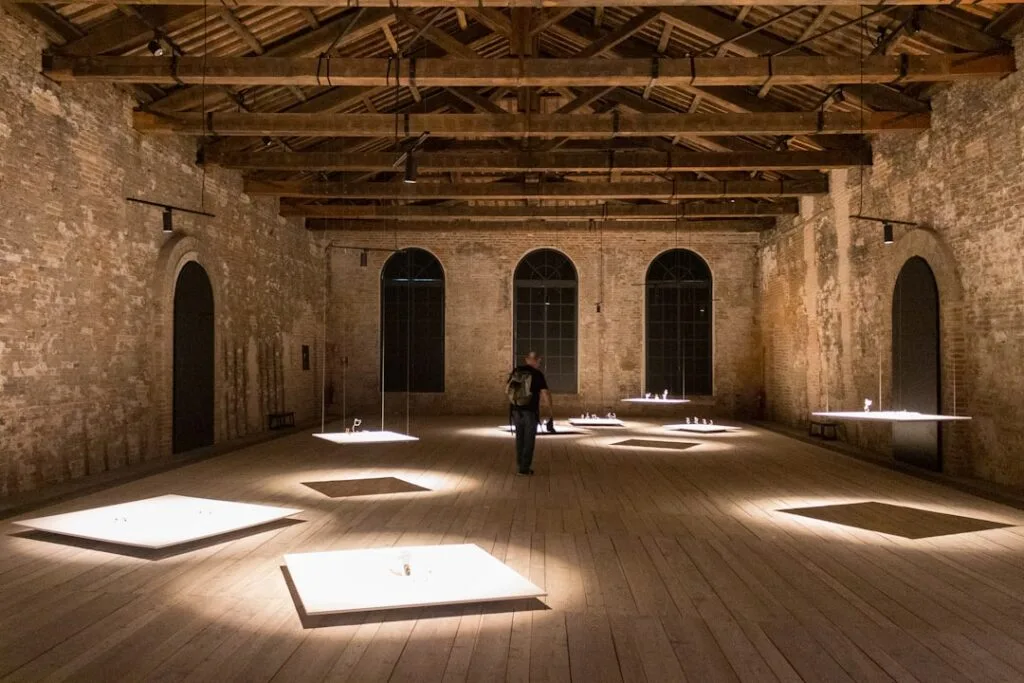
The third day focuses on interior architecture and scenography. Start at the Palazzo Fortuny – Museo Fortuny, located at San Marco 3952, 30124 Venezia. Opening hours: generally 10:00 – 18:00. Price: around €10. Mariano Fortuny’s palace is a perfect example of a space where design, light and textiles intersect: printed fabrics, lamps and the staging of the creator’s workshops offer a lesson in creating atmosphere. Pay attention to how Fortuny used textiles as screens and panels to modulate natural light.
Nearby, visit the Ca’ Pesaro – International Gallery of Modern Art (Santa Croce 2076, 30135 Venezia). Opening hours: often 10:00 – 18:00. Price: around €8-12. The collection includes sculptures and decorative works from the 20th century; the baroque façade contrasts with interiors dedicated to plastic experience and spatial installations. The visit lets you compare the traditional museum approach with Fortuny’s more intimate scenography.
After lunch, stroll toward the design shops and concept stores sprinkled through San Marco and the Santa Croce area. Don’t miss Libreria Acqua Alta (Calle Lunga Santa Maria Formosa 5176/B, 30122 Venezia) — more an installation than a bookstore, open from 9:00 to 20:30 — where books arranged in boats and bathtubs are a lesson in visual merchandising. For contemporary objects, look for stores like Design & Objects (addresses vary) selling limited pieces by local designers. Budget accordingly: small objects €20-100, major pieces can exceed €500.
Practical tips: take notes on materials and finishes you observe — mixes of wood, patinated metal and glass are common. If you’re working on a project, always ask about material provenance and conservation techniques (important in a saline environment). For interior photos, follow museum rules (often flash-free photography is allowed) and favor the soft morning light.
Day 4 — Textiles, costumes and small workshops: Museo di Palazzo Mocenigo, local craft and classes
Day four centers textile and costume in your design study. Visit the Museo di Palazzo Mocenigo – Museum of Textiles and Costume, located at Santa Croce 1992, 30135 Venezia. Opening hours: generally 10:00 – 18:00. Price: around €8. The museum displays dresses, fabrics, dye samples and information on historical weaving methods. It’s essential for understanding the link between fashion, stage and decor: how a dress contributes to a character’s staging and how patterns travel between workshops.
After the visit, take a hands-on workshop — several small schools or ateliers offer half-day classes in marouflage, natural dyeing or Venetian embroidery. Approximate prices: €40-€120 depending on duration and materials. These sessions are perfect for grasping the time and finesse required by local textile traditions.
In the afternoon, explore San Polo where small artisans still work on ribbons, accessories and bookbinding. Stop by a local framer to see conservation materials (mounts, UV-protective glass) and ask for recommendations if you purchase graphic works. Finally, visit the Fondazione Querini Stampalia (Castello 5252, 30122 Venezia) to appreciate the blend of library and interior designed by Carlo Scarpa (the garden and library provide lessons in landscape design and furniture). Opening hours: 10:00 – 18:00; entry often €6-8.
Practical tips: if you join a workshop, wear clothes you don’t mind staining. Always ask whether dyes are natural or synthetic and photograph the steps if the class allows it. For purchased textiles, request cleaning and conservation instructions: in a maritime climate, humidity and salt require preventive measures.
Day 5 — Contemporary design, designer boutiques and scenographic relaxation
On your final day, dive into Venice’s contemporary design: boutiques, showrooms and temporary spaces. Start with a stroll along the Riva degli Schiavoni and explore furniture and design shops near San Marco. Stop at the historic Caffè Florian (Piazza San Marco, 57, 30124 Venezia) for coffee in a historic setting: generally open 9:00 – 23:00, an espresso inside costs > €6 (terrace prices vary and can be higher). Observing the interior is observing a branding and visual identity preserved since the 18th century.
Then set aside time to visit showrooms of emerging designers (addresses vary by season). Local collectives often exhibit at the Centro Culturale Candiani or in pop-ups in Dorsoduro. If your trip coincides with the Biennale Architettura or the Venice Design Week, satellite exhibitions and workshops offer a panorama of contemporary design applied to urban space and sustainability.
To close your stay, enjoy dinner at a restaurant where staging is key, for example Ristorante Quadri (Piazza San Marco, 121, 30124 Venezia) — the décor, tableware and presentation make dining a real design show. A la carte dinner: expect €60-120 per person depending on menu and wine. Alternatively, choose a small osteria where simple furniture and quality materials will inspire minimalist ideas.
Final practical tips: before leaving Venice, double-check your flight or train times and allow enough time to reach the airport via Alilaguna or bus. Pack fragile purchases carefully (bubble wrap, certificates) and ask for invoices for shipping or tax refund if eligible. Finally, bring home visual samples — sketches, photos, material notes — to turn your Venetian inspiration into concrete projects once you’re back.
Conclusion
Venice, for the design enthusiast, is a dense and contrasting playground: every palazzo, workshop and shop window tells a story of material, skill and adaptation. In five days you can approach the island from several complementary angles: modern art museums that question form and spatial display, glass workshops that show an artisanal gesture constantly reinterpreted, and shops where tradition meets contemporaneity. This route balances passive observation — sitting and looking at details — and active participation — taking a workshop, talking with an artisan, buying a signed piece.
Favor slowness, take time with the light and plan around opening hours to get the most from the city. The addresses mentioned (Peggy Guggenheim Collection, Punta della Dogana, Museo del Vetro in Murano, Palazzo Fortuny, Ca’ Pesaro, Museo di Palazzo Mocenigo, Fondazione Querini Stampalia) provide a solid base to understand how Venice has preserved and reinvented its aesthetic heritage. Prices given in this article are estimates for guidance: it’s always wise to verify current rates and opening hours before you travel, especially during high season or special events.
Finally, bring back from Venice more than images: notes on finishes, contacts for artisans, material ideas. These elements will help you turn the emotion of a trip into tangible projects, whether for furniture, scenography or textile creations. And above all, keep your curiosity: in Venice every stretch of calle is a new blank page for the designer.


