





Introduction
Venice instantly brings to mind waterways, stone bridges, Byzantine façades and narrow pedestrian lanes where getting lost is part of the charm. Bringing a bike to this one‑of‑a‑kind city sounds appealing — you can reach outer neighborhoods faster — but it also feels contradictory since much of Venice’s historic center is off‑limits to cycling. One question keeps popping up among cycle tourists and travelers: “Can you take a bike on a traghetto?” In other words, can you cross the Grand Canal on those traditional, inexpensive rowboat ferries that shuttle people across where there’s no bridge?
In this article I’ll dig into the practical reality of bikes and the traghetto in Venice: the official rules, which boats might accept a bicycle, which routes and landing points are involved, and practical alternatives (vaporetto, bus, bike parking, folding bike rental). You’ll also find exact addresses, sample timetables, observed prices, local tips and recommendations to avoid surprises. I take a practical, immersive approach: I describe the sensory experience of crossing the Grand Canal on a traghetto — the slap of oars, the smell of salt mixed with coffee — as well as the logistical headaches (steps, narrow gangways, small capacity).
Important: Venice’s rules and transport services are always evolving, especially regarding traffic and mobility. Prices and timetables given below reflect the information available at the time of writing and are for guidance only. I list places, addresses and contacts clearly so you can verify directly with local operators (ACTV, the Municipality of Venice, rental points). The goal is to give you all the facts so you can decide if taking a bike to Venice fits your travel plan, or if other solutions (folding bike, leaving your bike at Piazzale Roma, secure storage) would suit you better.
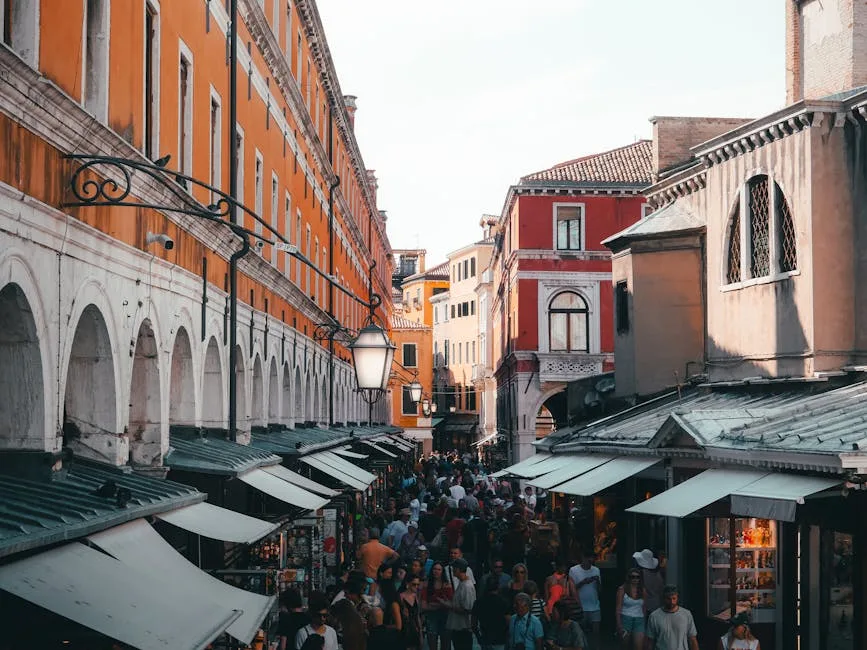
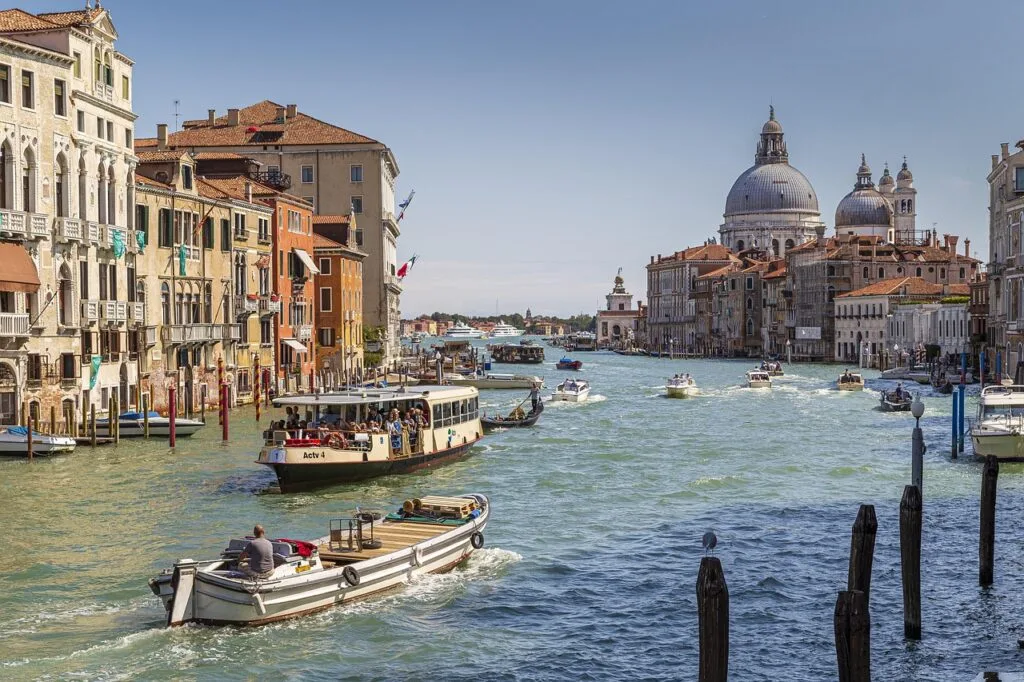
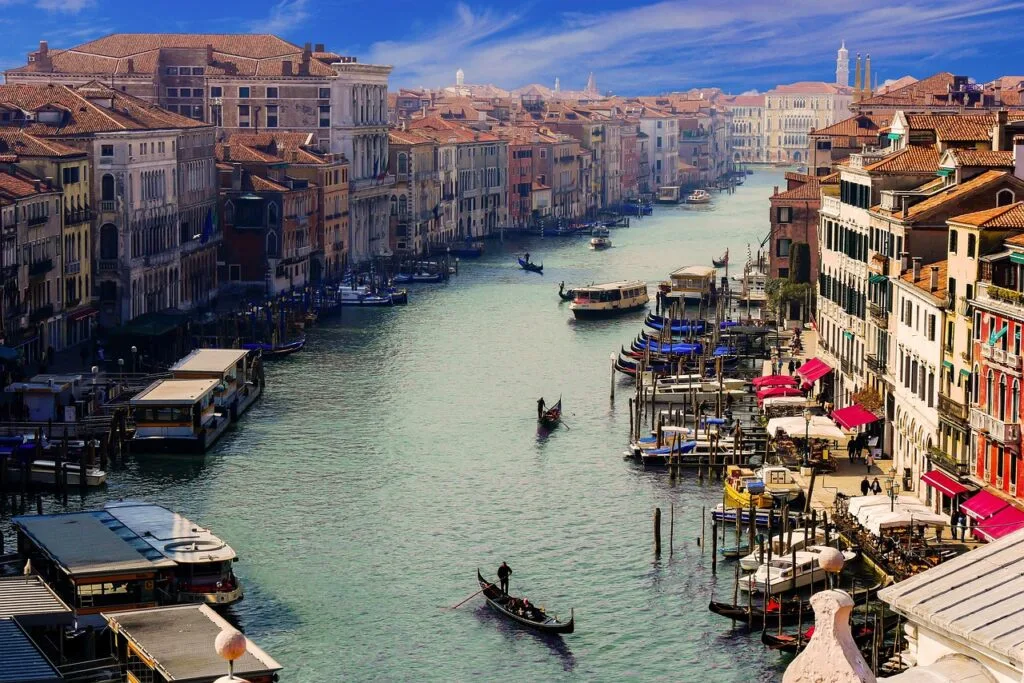
Finally, to make this more visual, I’ve included image cues in the text to help you picture the quays, the boats, the street scenes and the landmarks mentioned. Pack your bag, check your bike and read these tips before you set foot — and wheels — in Venice.
What is a traghetto and where are they found in Venice?
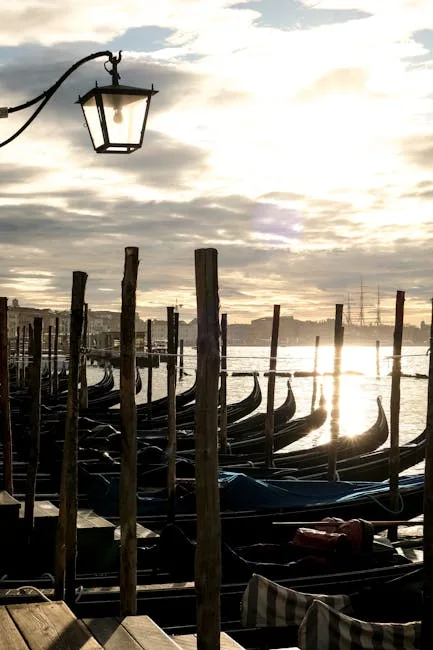
The word « traghetto » literally means “crossing.” In Venice, traghetti are small rowed boats — shaped somewhat like gondolas — that provide short, direct crossings of the Grand Canal at spots where there’s no bridge. Historically, before many bridges were built, these ferries were essential for daily life; today they remain a charming and cheap part of Venetian mobility. Traghetti are run by private boatmen or small cooperatives; the boats are mainly intended for pedestrians and travelers without bulky luggage.
Main boarding and landing points for traghetti on the Grand Canal (non‑exhaustive list):
- Traghetto di S. Tomà – San Marcuola: near Fondamenta San Tomà, s.n., 30121 Venezia VE — links the neighborhoods of San Polo and Dorsoduro.
- Traghetto di Ca’ Rezzonico – San Samuele: by the Museo di Ca’ Rezzonico, Campo San Barnaba, 2858, 30123 Venezia VE — crosses the Grand Canal at Palazzo Rezzonico.
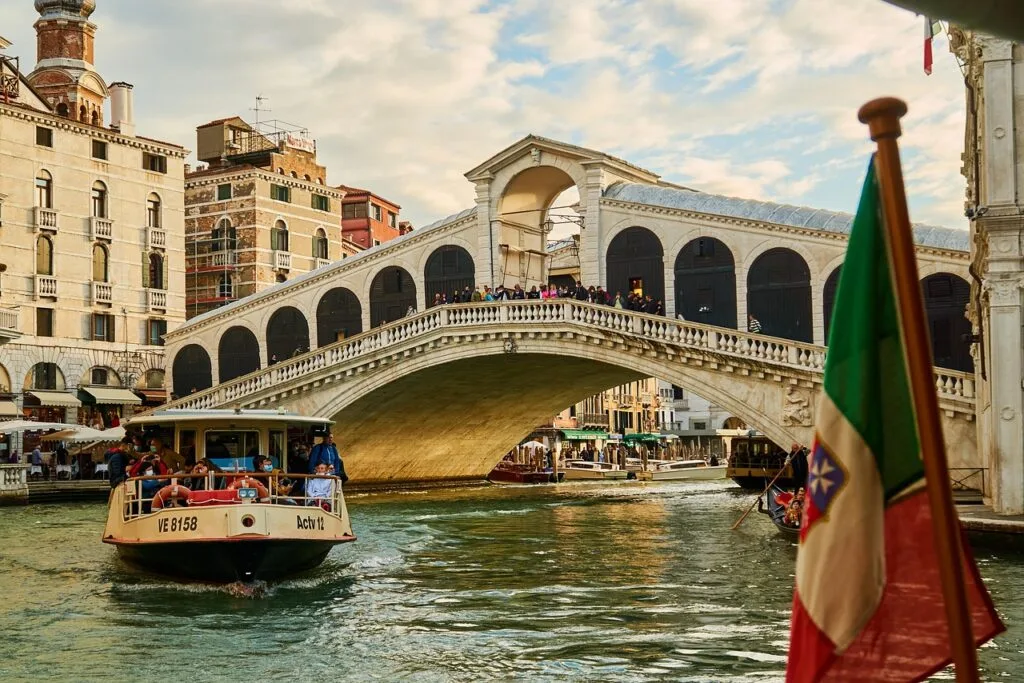
- Traghetto di Rialto (local crossing points): around the Ponte di Rialto, Ruga degli Oresi, 30125 Venezia VE — several small crossing spots in this busy area.
- Traghetto di Zattere: Fondamenta delle Zattere al Ponte Longo, 30123 Venezia VE — links to the Dorsoduro neighborhood.
These landing points are marked with “Traghetto” signs and are quite visible along the canal. However, unlike ACTV vaporetto stations that have official addresses and timetables, traghetti often operate according to tides, peak hours and the availability of the boatmen.
Visually, boarding a traghetto is a lovely moment: the low height of the boat, the careful balance when stepping in and out, the boatmen adjusting ropes, and the façades that seem to almost touch the water. But this very setup creates problems for cyclists: space is limited, boats often have fixed benches and low sides with no safe place to park a bike. Many traghetti don’t have ramps suited for bikes; boarding usually involves steps and stairs on the quay.
Rules vs reality: can you board a traghetto with a bike?
Short answer: most of the time, no — traditional traghetti do not accept full‑sized bikes. Here’s a more detailed, nuanced explanation.
Official rules and local practice:
- General rules: traghetti are designed for pedestrian crossings. Boatmen have some discretion and can refuse a bicycle if the boat is full or if the load compromises safety.
- Safety and stability: a bike placed inside a small boat can unbalance it when passengers step in and out, especially if waves or wakes from vaporetti or service boats hit the boat.
- Quay accessibility: many landings involve narrow gangways and steps; lowering or lifting a bike in these conditions is often impossible without significant help.
- Localized exceptions: occasionally, less touristy and slightly larger traghetti will accept folding bikes or lightweight bicycles if the boat allows it and the boatman agrees. But that’s never guaranteed.
Local practical advice: if you have a non‑folding bike, don’t count on the traghetto to get you across the Grand Canal. Plan to combine other means: take a vaporetto (with permission), detour via bridges (Ponte dell’Accademia, Ponte di Rialto, Ponte degli Scalzi) or leave your bike in secure storage (see the “Alternatives” section).
Fares and schedules: traditionally a traghetto ride cost around €2.00 per person (single fare, cash often required on board). Schedules are informal: most operate continuously during the day, with peaks in the morning (8am–10am) and late afternoon (5pm–7pm). These patterns vary by season. For official ACTV services (vaporetto), consult the Piazzale Roma station Piazzale Roma, Piazzale Roma, 30135 Venezia VE for connections and timetables.
Practical alternatives for cyclists: vaporetto, bus, storage and folding bikes
If a traghetto isn’t a reliable option, what are realistic alternatives for moving around with a bike in Venice? Here are the most relevant choices and how to use them.
1) Vaporetto (official water bus) — ACTV
- What it is: the vaporetto is Venice’s official public water bus network run by ACTV. These are proper boats with dedicated piers, boarding areas and an established fare system.
- Bike policy: ACTV sometimes allows folding bikes when folded and stowed. Full‑size bikes are generally forbidden on regular lines during peak hours. Special permissions may exist for certain services or by reservation for groups, but they’re limited.
- Useful station: Ferrovia – Stazione Santa Lucia (Piazzale Stazione, 30121 Venezia VE) to board with a folding bike and then connect to Piazzale Roma, Piazzale Roma, 30135 Venezia VE for onward road links.
- Indicative fares (check before travel): single ACTV ticket roughly €9.00 / 75 minutes (2024–2025 figures to confirm on ACTV’s site). Day passes: 24‑hour ≈ €30.00, 48‑hour ≈ €45.00.
2) Bus and train to Piazzale Roma / Tronchetto
- Why: Piazzale Roma and the island of Tronchetto are the main land gateways to Venice. From these points it’s often simpler to leave a bike in secure storage or use specific shuttles.
- Addresses: Piazzale Roma, 30135 Venezia VE; Tronchetto Parking, Isola Nova del Tronchetto, 30135 Venezia VE.
- Parking/storage fees: bike storage at Tronchetto varies — often between €3.00 and €10.00 per day for secure bike lockers; car parks are much more expensive (around €20.00–€30.00 per day).
3) Folding bike rental and secure storage
- Recommended rentals: opt for a folding bike rental (Brompton or similar) that folds to cabin size and can be taken on the vaporetto. Example rental addresses: Green Line Bike Rental, Fondamenta San Zaccaria, 30122 Venezia VE (indicative — check locally) and small shops near Piazzale Roma.
- Storage: small bike deposit services exist around Piazzale Roma and Tronchetto, sometimes run by hotels or private car parks (paid service, reservation recommended).
 Click here to buy a Venice City Pass with transport included
Local tip: if you really want to keep your bike, prioritize getting to the Lido di Venezia — it has more developed bike paths — and explore the island by bike. Ferries and specific services to the Lido or the mainland (Terraferma / Mestre) can offer more flexibility for bicycles.
Click here to book a private beach day from St. Mark’s Square
Real‑world scenarios: routes, addresses and tips to get across without a traghetto
Here are concrete scenarios and routes with addresses, timing and tips to prepare your moves if you have a bike.
Route A — From Piazzale Roma to Dorsoduro without a traghetto:
- Start: Piazzale Roma, 30135 Venezia VE.
- Suggested route: cross via Ponte degli Scalzi (near Santa Lucia Railway Station) to reach Santa Croce, then detour via the Ponte di Rialto (Ruga degli Oresi, 30125 Venezia VE) if you can carry your bike up the steps, then descend toward Fondamenta Zattere to reach Dorsoduro.
- Tip: avoid very narrow alleys and use lifts/passages where available; otherwise be ready to carry your bike over bridges with many steps (for example, Ponte di Rialto has about 20 steps on each side).
- Nearby landmark: Basilica di Santa Maria della Salute, Punta della Dogana, Dorsoduro 1, 30123 Venezia VE — usually open roughly 9:30am–6:00pm (times vary).
Route B — From Tronchetto to the Lido, avoiding traghetti:
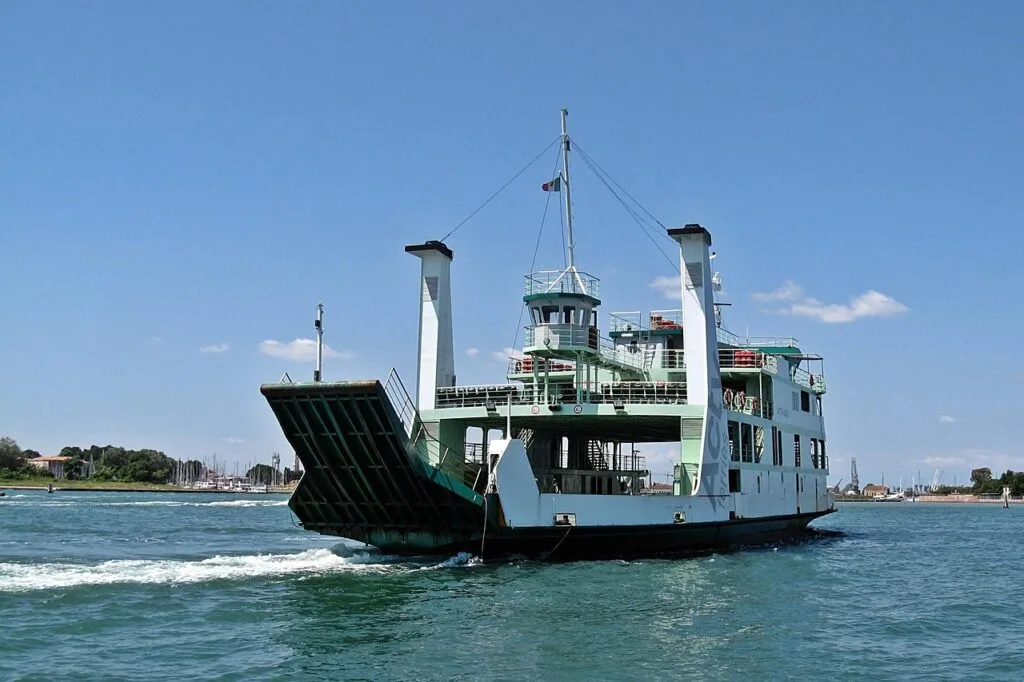
- Board at Tronchetto (Isola Nova del Tronchetto, 30135 Venezia VE) on a private shuttle or the ferry to the Lido (lines 17 or 15 depending on season).
- Advantage: these services sometimes tolerate bikes if they are secured and there’s room. Check in advance at the ACTV desk in Tronchetto.
- Practical tip: leave your bike in a Tronchetto storage if you plan to visit the historic centre without your bicycle.
Route C — If you’re on a road bike and want to avoid the old town:
- Stay on the mainland and explore Mestre and Marghera, which have more suitable cycle paths. Useful address: Parco San Giuliano, Via della Libertà, 30173 Mestre VE — a large park for cycling and leisure rides.
- Access: regional train from Venezia Santa Lucia to Mestre (Stazione di Mestre, Piazzale della Stazione, 30174 Venezia VE). Regional trains often allow bikes in designated areas off‑peak (check Trenitalia / regional rules).
Local practical tips: boarding, security and riding in Venice
A few concrete tips before you go to minimize problems and make the most of Venice even with a bike.
Boarding tips and etiquette:
- Always ask first: if you try to board a traghetto or any private boat with a bike, always ask the boatman before approaching. The answer depends on crowding and sea conditions.
- Wear gloves and grippy shoes: quays can be slippery; lifting a bike on a wet gangway is risky without the right gear.
- Bring a strong lock: if you leave your bike in storage or park it at Piazzale Roma, use a sturdy lock (U‑lock plus cable). Theft is less common on the islands than on the mainland, but transit points and parking areas still carry risk.
- Consider a folding bike: if possible, go for a folding bike; it lets you board the vaporetto and take your bike into cafés and museums rather than leaving it outside.
Safety and regulations:
- General prohibition: most of the historic center is pedestrianized; cycling in these zones is often discouraged or prohibited, and you risk inconveniencing pedestrians. Local authorities can fine for dangerous riding.
- Times to avoid: mornings and late afternoons (8am–10am and 5pm–7pm) — heavy tourist traffic, full boats and more disrupted services.
- Respect locals: move slowly and be prepared to dismount and walk your bike in very crowded places (Piazza San Marco, Riva degli Schiavoni).
Useful addresses, museums and landmarks near the quays — practical info
To help orient yourself in Venice, here’s a selection of key spots with exact addresses, typical opening hours and advice for travelers with bicycles (or those trying to avoid having one).
-
Basilica di San Marco
Address: Piazza San Marco, 328, 30124 Venezia VE, Italy.
Hours: generally 9:30am–5:00pm (closing times vary for religious services).
Price: main entry is free (zoned access), museum/terrace access is paid: roughly €5.00–€15.00 depending on options. Tip: avoid arriving on a bike — park at Piazzale Roma and walk in. -
Palazzo Ducale (Doge’s Palace)
Address: Piazza San Marco, 1, 30124 Venezia VE, Italy.
Hours: 8:30am–7:00pm (seasonal variation).
Price: combined ticket Museo Correr / Doge’s Palace ≈ €25.00 (indicative).
Tip: wear comfortable shoes; no bikes allowed in the complex. Click here to book skip‑the‑line access to the Doge’s Palace
-
Galleria dell’Accademia
Address: Campo della Carità, 1050, 30123 Venezia VE, Italy.
Hours: 8:15am–7:15pm (varies, sometimes closed Mondays in low season).
Price: ticket ≈ €12.00–€15.00 (indicative).
Tip: access via the Ponte dell’Accademia — be prepared to carry your bike up the steps if needed.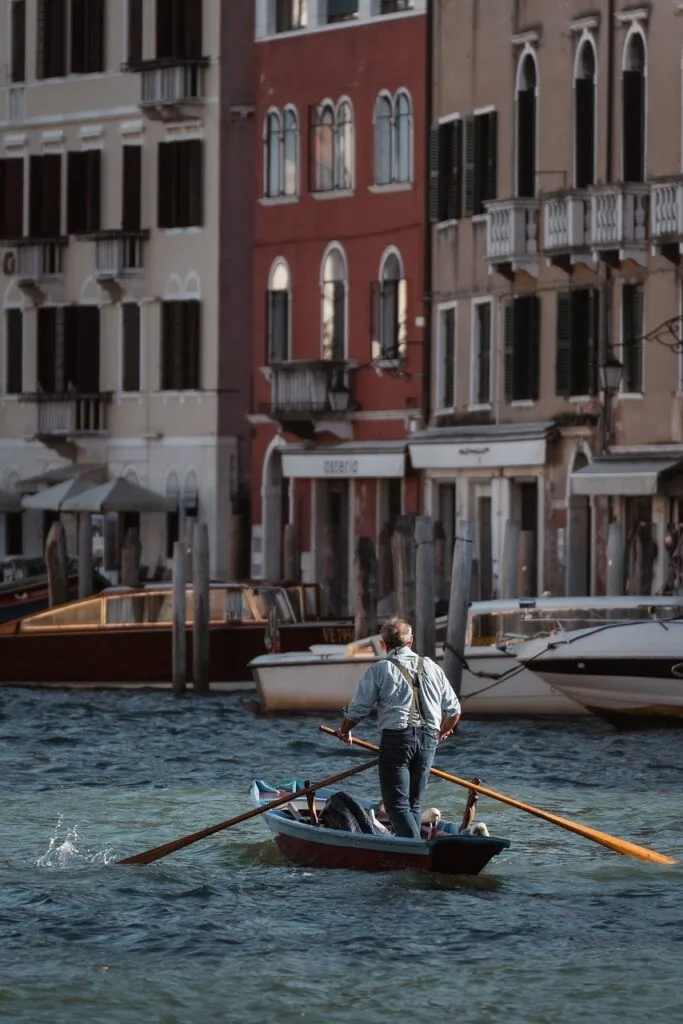
-
Stazione di Venezia Santa Lucia
Address: Piazzale della Stazione, 1, 30121 Venezia VE, Italy.
Hours: station open 24h, ticket office hours vary (around 6am–10pm).
Tip: a key point for reaching Mestre; regional trains sometimes allow bikes (check Trenitalia rules).
Conclusion
Trying to board a full‑size bike on a traditional traghetto in Venice turns out to be quite impractical and rarely possible on a systematic basis. Traghetti were designed for pedestrians and lack ramps and space to secure a bike. On quieter crossings a helpful boatman might accept a light bike if it doesn’t endanger anyone, but that’s neither reliable nor advisable if you plan regular trips.
To sum up viable solutions: prefer a folding bike (easy to carry onto ACTV vaporetti), leave your bike in secure storage at Piazzale Roma or Tronchetto, or explore the periphery and the Lido where cycle paths are better. If you insist on keeping a road bike, aim your itinerary at Mestre/Marghera and use trains for suitable links. Remember safety first: always lock your bike with a good lock and avoid routes that force you to carry it up many steps.
A few final practical reminders: always check current fares and timetables with ACTV (official website or ticket offices); politely ask the boatman’s permission before any attempt to board a traghetto with a bike; consider a folding bike if you plan to spend a lot of time in the historic center; and build extra time into your plans because crossings, stairs and crowds will slow you down. Venice remains a magical destination where slow walking often rewards you the most — but with a little planning and the right gear, you can still combine cycling mobility with the pleasures of La Serenissima.