





Introduction
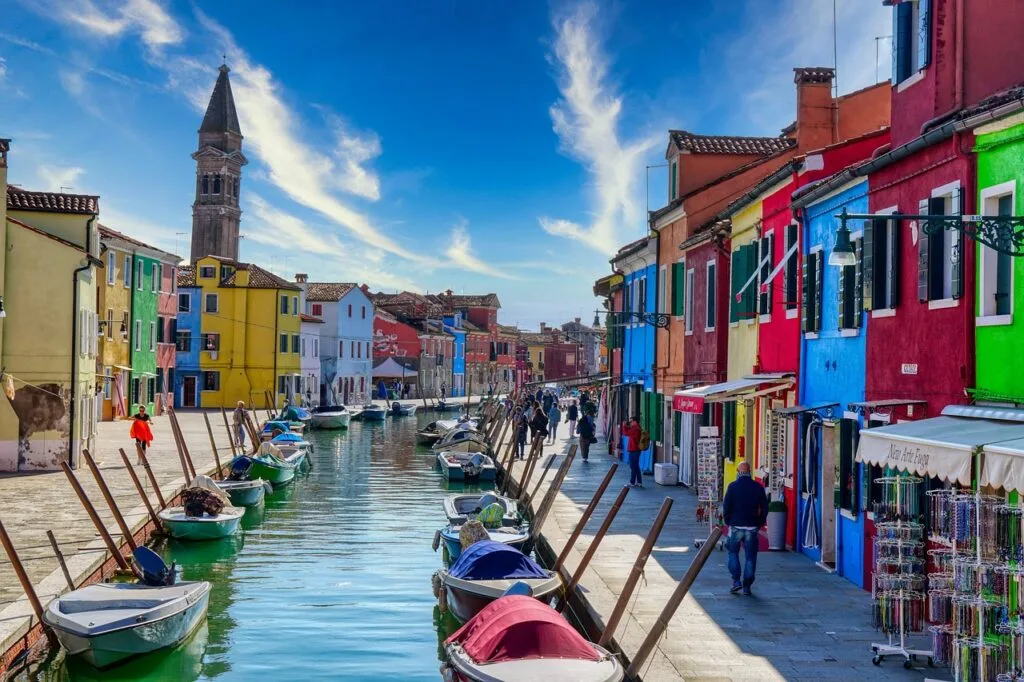
Venice is more than the Serene Republic spread across canals and palaces: it’s also an archipelago of small islands packed with visual and craft treasures. Among them, Murano and Burano create a fascinating and complementary contrast — one devoted to fire and blown glass, the other to color and lace. This photo itinerary for Murano and Burano is built for traveling photographers, whether you’re an enthusiastic amateur or a pro looking for practical cues, exact addresses and technical tips. You’ll find iconic viewpoints, the best times to shoot, practical information on access and fares, and tasty recommendations to punctuate your day.
The ideal day starts early, with the soft morning light caressing the glossy facades of the colorful houses and highlighting reflections on the canals. Through the following sections I walk you step-by-step: where to position yourself to photograph a glassblower in action, how to capture the endless perspective of Murano’s fondamenta, and how to get the best reflections of Burano’s rainbow facades at sunset. You’ll also find exact addresses like the Museo del Vetro and the Basilica di Santa Maria e San Donato in Murano, or the Chiesa di San Martino and the Museo del Merletto in Burano, with opening times and approximate prices so you can plan your shoots efficiently.
Beyond the spots, the article details invaluable tips: which lens to favor (wide-angle for alleys, 24–70mm for versatility, 70–200mm for workshop details), how to handle exposure with stained glass or the metallic reflections of glass, and composition tricks to make your images tell a story. I also share logistical recommendations — vaporetto tickets, best ACTV lines, lunch breaks and restaurants that offer useful views for food or atmosphere photography.
Finally, this itinerary is meant for respectful travelers: timing tips to avoid crowds, advice on staying discreet during glassblowing demos, and best practices to avoid disturbing artisans. Caring for the places and people you photograph is part of responsible travel. Charge your memory cards and batteries: let’s discover Murano and Burano, two Venetian gems made to be seen, admired and captured.
Preparing the day: transport, tickets and timing
To make the most of your shooting time, planning the route is crucial. From Venice’s historic center (for example Venezia Santa Lucia station or the Rialto area), take ACTV vaporetto lines serving Murano and Burano. The most commonly used connections are ACTV 4.1 / 4.2 (Fondamente Nove ↔ Murano) and ACTV 12 (Murano ↔ Burano), but there are also direct lines from Fondamenta Nuove and Piazzale Roma depending on the season. A single ACTV ticket (single zone) costs about €9.50 and is valid for one hour; there are 24/48/72-hour passes (roughly €22, €30, €40 — check official ACTV fares before you go).
Schedules: the first vaporetti depart early in the morning (depending on the route between 05:30 and 07:00). For optimal light and fewer people, leave with the first service and aim to arrive in Murano around 08:00–09:00. If you’re staying near Fondamente Nove, the crossing to Murano takes about 10–15 minutes; from Rialto or St. Mark’s Square, count on 20–30 minutes depending on the line.
Practical tips:
- Tickets: buy ACTV tickets in advance at tabacchi (tobacco shops), ticket machines or via the official ACTV app to avoid queues.
- Photo timing: to shoot glassblowing, check public demonstrations which often start between 09:30 and 11:00 in several workshops. Museums usually open around 10:00.
- Season: spring and autumn offer ideal light and fewer tourists than July–August. Winter is quieter but colder and sometimes misty — great atmosphere for black & white work.
- Protecting gear: bring covers against moisture and a microfiber cloth: salty spray can quickly dull your lenses.
 Click here to Book a boat tour to Murano and Burano
Murano: detailed photo route (morning to early afternoon)
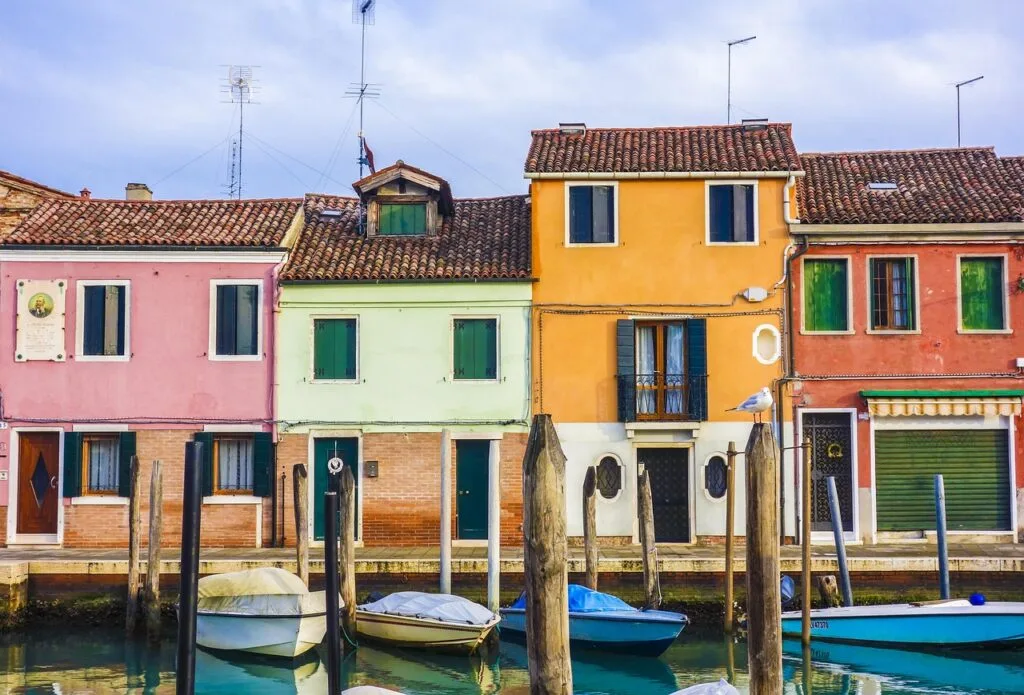
Start your exploration at Fermata Museo (the main vaporetto stop for Murano) and head to the Museo del Vetro (Murano Glass Museum). Address: Museo del Vetro, Fondamenta dei Vetrai, 12, 30141 Murano, Venezia VE, Italy. Indicative opening hours: 10:00–17:00 (closed on some days, check before visiting). Fee: entry around €8–€12. The museum provides essential historical context: old machines, enameled glass pieces, and presentations on glassblowing techniques. Inside, use a 35–50mm lens to capture object details and a 24mm when space is tight around display cases.
Continue to the Basilica di Santa Maria e San Donato, one of Murano’s most photogenic churches. Address: Piazza Santa Maria e Donato, 30141 Murano, Venezia VE, Italy. Hours: generally 09:00–18:00 (seasonal variations). Price: free access to the church, some exhibitions may charge €3–€5. Its Byzantine facade and mosaic pavements offer gorgeous textures and contrast; favor a wide-angle for the exterior and a 24–70mm for interior shots in low light (moderate ISO, tripod if allowed).
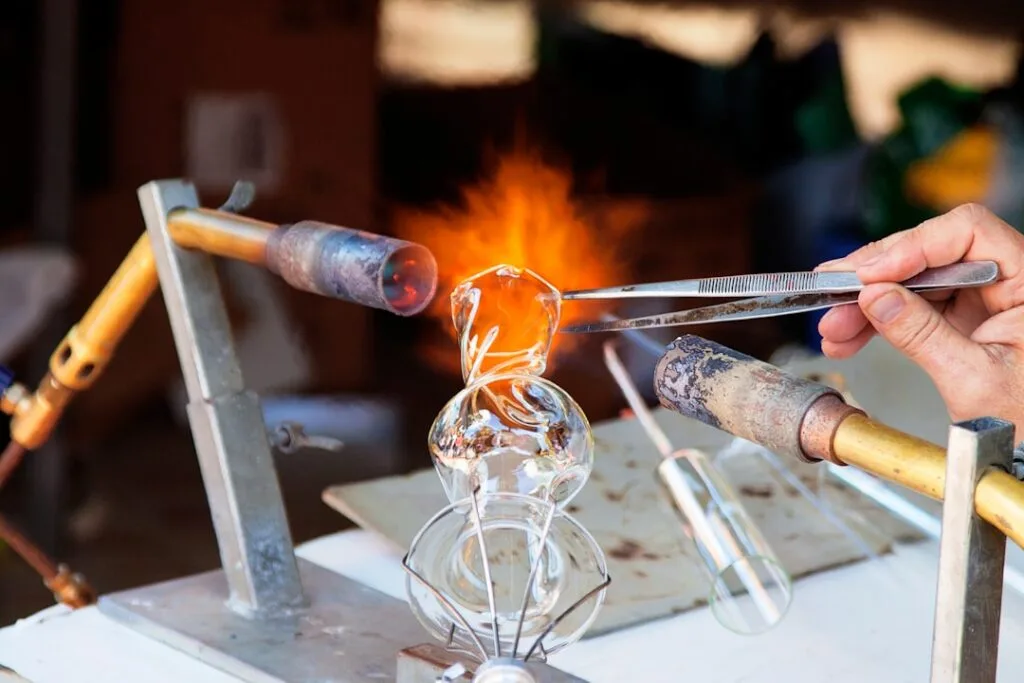
Next, walk along the Fondamenta dei Vetrai — the emblematic street lined with workshops and glass shops. Symbolic address: Fondamenta dei Vetrai, 30141 Murano, Venezia VE. Look out for workshops offering public demonstrations (for example the Vetreria Venini showroom). Example shop address: Vetreria Venini, Fondamenta dei Vetrai, 38, 30141 Murano, Venezia VE, Italy (typical showroom hours 09:30–18:00). Prices for pieces vary hugely: small souvenirs from about €15 to artworks costing hundreds or thousands of euros.
Click here to Book a beginner glassblowing workshop
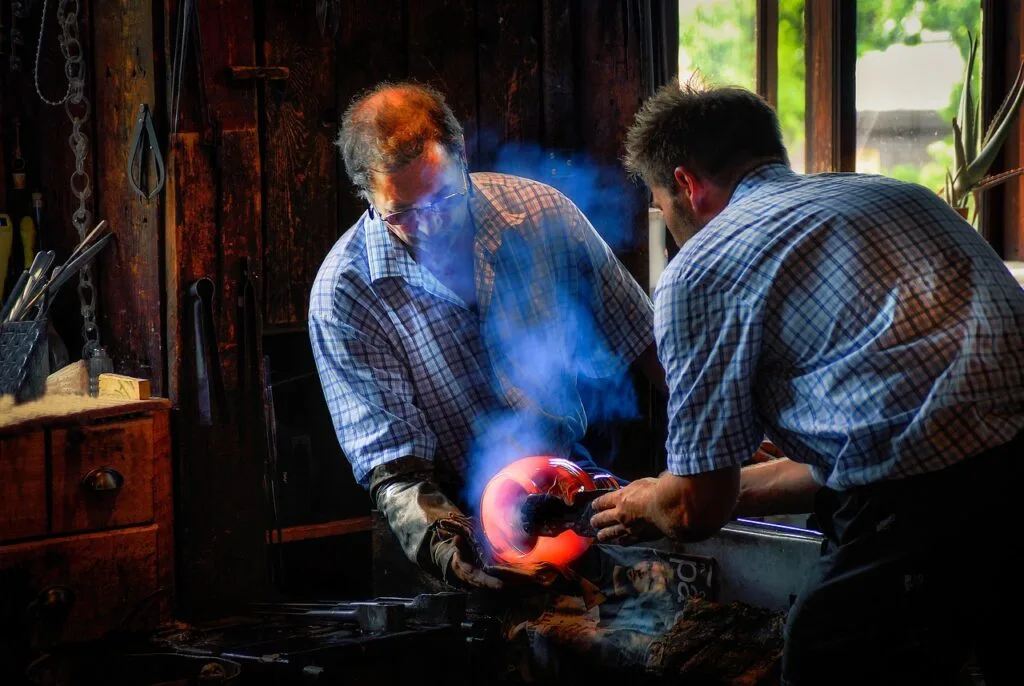
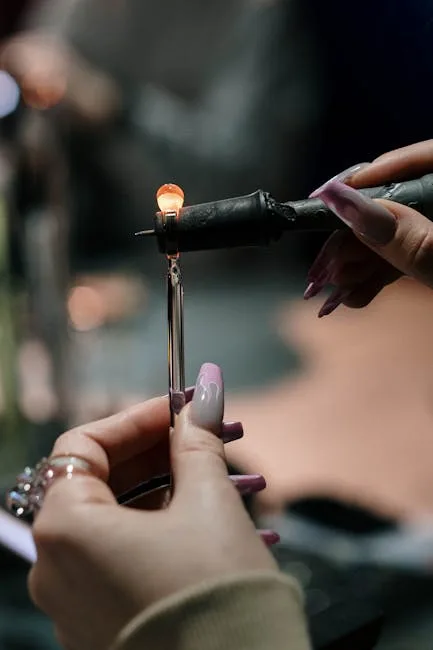
Photo tip for workshops: be respectful and ask permission before shooting artisans up close. The best images often come during the intense phases of blowing: molten glass, the gather on the pipe and the rotation — moments where light and shadow and the glass’s shiny texture create a dramatic result. Use a fast shutter speed (1/250s or faster) to freeze motion, or deliberately slow down to create artistic motion blur if it’s allowed and safe.
Burano: detailed photo route (late afternoon and golden hour)
From Murano, take ACTV line 12 to Burano (around a 20–30 minute crossing). You’ll arrive at Piazza Galuppi, the island’s heart. Central address: Piazza Galuppi, 30142 Burano, Venezia VE, Italy. Burano is famous for its brightly painted houses and lace-making craft. Start with a freewalk along the canals: an unwritten rule is to respect residents’ personal space while capturing the harmony of the colors. The best light for facades is late afternoon, when the lower sun intensifies hues — perfect for golden hour photography.
Click here to Book a Murano and Burano boat excursion
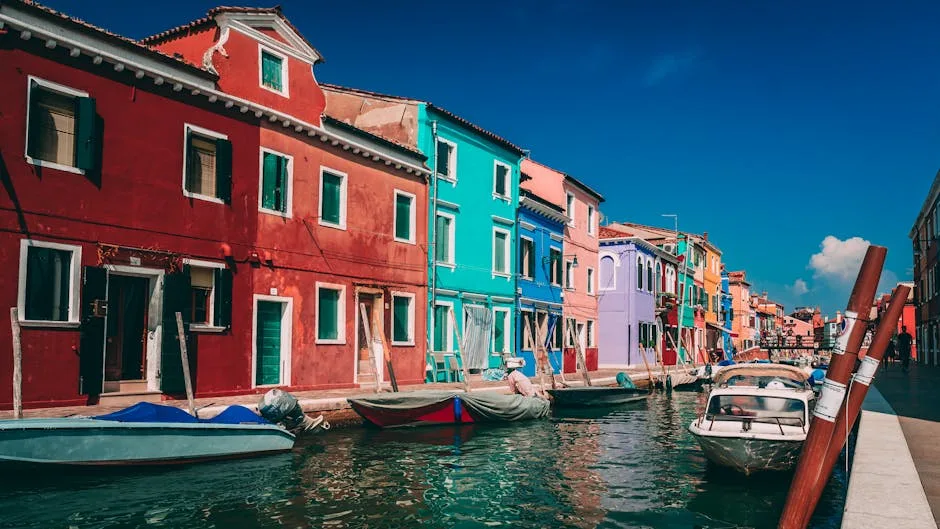
Visit the Museo del Merletto (Lace Museum). Address: Museo del Merletto, Calle del Pistor, 2, 30142 Burano, Venezia VE, Italy. Hours: often 10:00–17:00 (closing times vary). Price: entry around €3–€6. The museum highlights the lace tradition with showcases and historical pieces. For photography, use a macro lens or your camera’s macro mode to isolate tight patterns and the delicate stitches.
Don’t miss the Chiesa di San Martino (Church of San Martino) and its slightly leaning campanile, a picturesque landmark. Address: Piazza Galuppi, 30142 Burano, Venezia VE. The alleys perpendicular to the main canal, like the stretches near the Fondamenta dei Squeri, provide converging-line compositions and vivid colors — perfect for symmetry and water reflections.
For a meal, try a local osteria: fresh seafood dishes (cuttlefish risotto, sardines in saor) and cicchetti are recommended. Example: Trattoria da Romano (Piazza Baldassare Galuppi 221, 30142 Burano VE — check opening times and reserve). Prices: starters around €8–€15, mains €12–€25. Photograph your dishes in natural light by a window for warm tones — watch the colorful background, which will add character to your food shots.
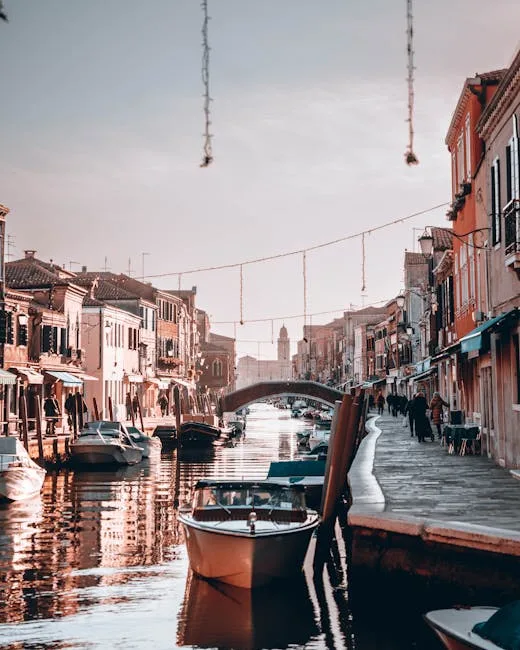
Finish the day at sunset to capture golden reflections on the facades, moored boats and the calm atmosphere as tourists thin out. It’s the ideal time for a wide shot from a small bridge, or an environmental portrait of a local — always after asking permission.
Practical photo tips, gear and recommended spots
Recommended gear:
- Lenses: 16–35mm (wide-angle) for alleys and facades, 24–70mm for versatility, 70–200mm for workshop details and tight portraits, and a 50mm or macro lens for lace close-ups.
- Light tripod: useful for museum interiors and long exposures at dusk. Some sites (craft workshops) prohibit tripods, so always check.
- Filters: circular polarizer to reduce water glare and intensify colors; a mild ND for experimenting with long exposures on the water during daytime.
- Accessories: spare batteries, memory cards, waterproof cover and a microfiber cloth.
Settings and techniques:
- For blown glass: fast shutter (1/250s or faster), low ISO according to light, aperture f/4–f/8 to keep detail.
- For colorful facades: expose for highlights and recover shadows in RAW, slightly warm white balance for golden hour.
- For lace: soft side light, tripod and aperture f/5.6–f/11 for depth of field across the pattern.
Good addresses and services:
- Museo del Vetro – Fondamenta dei Vetrai, 12, 30141 Murano VE. (Entry ~€8–€12, 10:00–17:00)
- Basilica di Santa Maria e San Donato – Piazza Santa Maria e Donato, 30141 Murano VE. (Free access, hours vary)
- Vetreria Venini (showroom) – Fondamenta dei Vetrai, 38, 30141 Murano VE. (shop hours 09:30–18:00)
- Museo del Merletto – Calle del Pistor, 2, 30142 Burano VE. (Entry ~€3–€6, 10:00–17:00)
- Piazza Galuppi – Burano’s hub for scouting and coffee breaks.
Click here to Book a Murano glass factory demonstration visit
Local tip: avoid peak hours for organized tours (generally 10:30–14:30). If you want street portraits, always approach courteously, show your images after taking the photo — this often opens warm exchanges and sometimes more photographic opportunities.
Conclusion
Murano and Burano are two islands that captivate with very different but complementary visual languages: the transparency and fire of glass in Murano, the color and finesse of lace in Burano. A well-thought-out photo itinerary not only helps you capture striking images but also helps you understand and respect local craftsmanship. By respecting museum and workshop hours, adapting your gear and settings to the scenes (workshop, church, facade, canal) and adopting respectful behavior toward artisans and residents, you’ll come away with a rich and varied photo series.
Remember that travel photography is not just about collecting images: it’s about catching moments, moods and details that tell a story. Take the time to sit on a bench facing a canal, watch an artisan blow glass, smell grilled fish outside a Burano trattoria. Those sensations will shine through in your photographs.
Before you go: check up-to-date opening times, buy your ACTV tickets in advance if possible, protect your gear from sea humidity, and wear comfortable clothes. Finally, leave room for surprise: some of the best photos are born of the unexpected — a passing boat, a shaft of sunlight, a smile offered in exchange for a portrait. Have a great photographic trip to Murano and Burano — may your images do justice to the beauty and soul of these Venetian isles.