




Introduction
Venice is a city of water, stone soaked by the lagoon and age-old traditions. Among the daily rituals that punctuate Venetian life, the traghetti — those local « ferries » that cross the Grand Canal — offer a small, authentic experience often missed by hurried tourists. Unlike the lavish tourist gondolas and the crowded vaporetti, the traghetti represent a popular, inexpensive form of mobility deeply rooted in the city’s social and economic history. Their original purpose was simple: to let residents, workers and artisans cross the Grand Canal quickly where there was no bridge, or where building one made little sense.
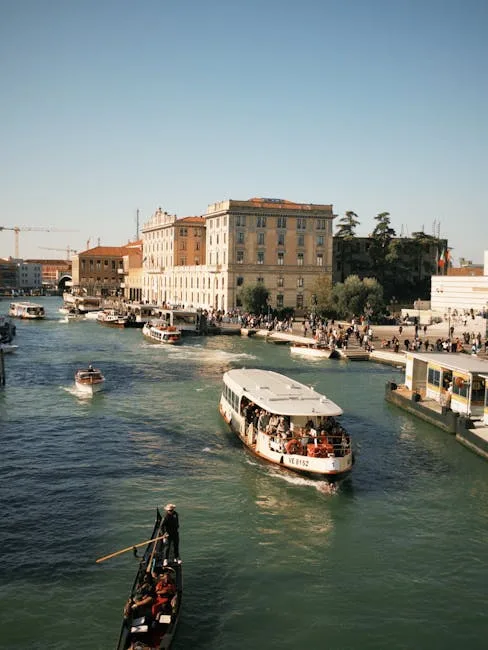
Skipping a traghetto at least once during a visit to Venice is missing an immersive moment. Boarding usually happens from modest quays, without fancy ticket booths, facing Renaissance palaces, baroque churches or bustling markets. On board, you only pay a few coins or euros — in practice, a trip typically costs between €0.50 and €2.00 — and you share the crossing with locals, students and delivery people. The ferryman’s gesture, the slight tilt of the boat, the scent of wood and saltwater, the close-up view of Venetian façades: all combine into a moment that feels suspended in time.
In this article we’ll dive into the history of the traghetti, uncover curiosities that surround them, map out a few emblematic boarding points and give practical tips to make the most of these crossings. We’ll mention familiar, easy-to-find places in Venice — like Piazza San Marco, the Rialto Bridge or the Basilica di Santa Maria della Salute — with addresses, typical hours and fares so you can plan your routes. The goal is not only to give you practical information but to deliver a sensory immersion: to help you picture stepping into one of these small boats and understand why, despite the centuries, the traghetti remain a living part of Venice’s puzzle.
Whether you’re a romantic traveler after an intimate experience, a photographer hunting for unusual angles, or simply curious to understand local life better, traghetti have something to offer. They let you study architectural details from the water, glimpse façades rarely seen from bridges, and interact directly with the local population. We’ll also focus on safety, the best times of day to ride, connections with vaporetto lines, and a few good addresses to extend your walk once you reach the opposite bank. Lace up sturdy-soled shoes, get your camera ready and let yourself be guided: the crossing begins now.
 Click here to book your skip-the-line ticket to the Doge’s Palace
History of the traghetti: from medieval origins to today
The traghetti grew out of the practical need to cross arms of the Grand Canal long before stone bridges became plentiful. In the Middle Ages and Renaissance, Venice was a vital commercial hub: merchants, craftsmen, sailors and dignitaries were always on the move. The branches of the Grand Canal separated entire neighborhoods, and building closely spaced bridges was neither economically nor urbanistically desirable. Thus oared crossings developed, services organized by brotherhoods and by families of barcaioli (boatmen).
The word « traghetto » comes from the Italian traghettare, meaning « to ferry across. » Initially, these boats provided a regular service, sometimes overseen by municipal levies. The job of traghettatore (ferryman) required strength and skill: currents, tides and canal traffic demanded caution and coordination. Over the centuries, even as new bridges were built, certain crossing points retained importance due to direct routes between residential areas, markets and artisan workshops.
In modern times, mechanization and the rise of the vaporetti changed travel habits, but the traghetti endured. They became a local symbol: wider, more rustic boats than the classic gondola, propelled by two barcaioli standing at each end, often wearing work clothes and using techniques passed down from father to son. Today traghetti still offer an economical, quick crossing despite tourist pressure. They’ve also been embraced as heritage: some crossings are now promoted as authentic experiences for visitors wanting to « live like a Venetian. »
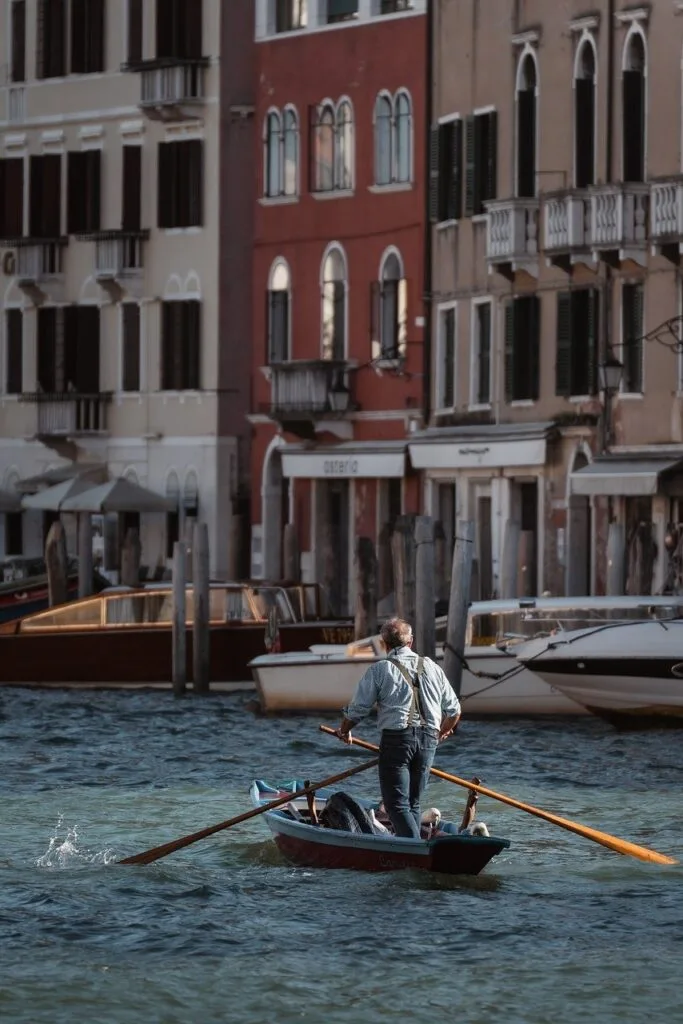
From an administrative and regulatory standpoint, traghetti follow the same navigation rules as other lagoon craft: registration, signaling and respect for traffic lanes. However, the symbolic fare — often €0.50 to €1.50 per trip — reflects their original public-service purpose. They also testify to a way of life: a city that combines urban efficiency with the poetry of moving across water.
Main boarding points and local curiosities
Grand Canal crossing points are scattered where a bridge doesn’t exist. Some landing spots have become landmarks, both practical and touristic. Here’s a selection of crossing points and nearby reference points — with addresses and useful information — to help you locate and take a traghetto.
Traghetto San Tomà (near the Ponte degli Scalzi)
– Nearby landmark: Ponte degli Scalzi / Santa Lucia train station
– Approximate address: Fondamenta San Simeon Piccolo, 30121 Venezia VE (near Stazione di Venezia Santa Lucia)
– Description: This crossing is immediately close to Stazione di Venezia Santa Lucia (Sestiere Cannaregio). Handy for anyone arriving by train who wants to reach the heart of the city quickly without wandering to the Rialto Bridge or the Ponte degli Scalzi. The crossing offers a direct view of the Chiesa di San Simeon Piccolo and the façades of the San Marco district.
Traghetto Ca’ Foscari (Dorsoduro)
– Nearby landmark: Ca’ Foscari University / Galleria dell’Accademia
– Approximate address: Calle Lunga Santa Maria, 30123 Venezia VE (near Ca’ Foscari)
– Description: Ideal for linking Dorsoduro with the San Marco or Cannaregio districts. This point offers close-up views of grand palaces like Ca’ Foscari (Università Ca’ Foscari Venezia) and quick access to the Galleria dell’Accademia (Campo della Carità, 1050, 30123 Venezia VE). Mornings provide soft light on Venetian stone, perfect for photography.
Traghetto di Santa Maria del Giglio
– Nearby landmark: Piazza San Marco, Doge’s Palace
– Address: Campo San Moisè, 30124 Venezia VE (a stone’s throw from Piazza San Marco)
– Description: Boarding here feels like floating at the foot of the vast stage of Piazza San Marco and the Doge’s Palace (Piazza San Marco, 1, 30124 Venezia VE). The gilded façades and mosaics of the basilica remain a spectacle from the water; the short crossing lets you avoid bridge crowds and reach quieter corners of the shore.
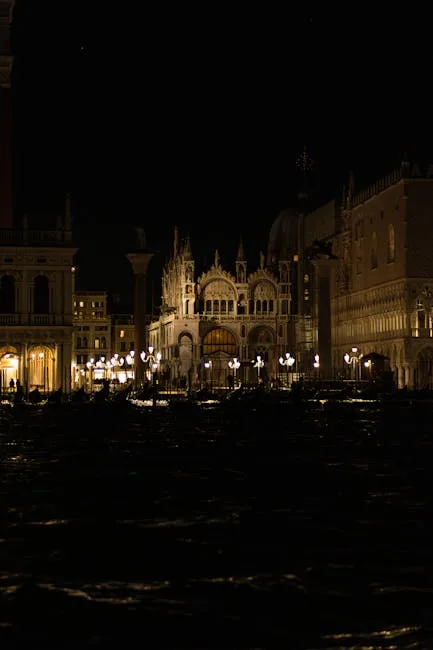
Other notable points include: Traghetto alla Maddalena (near the central Grand Canal), Traghetto di Santa Sofia (near the fish market) and several stops along the Cannaregio. Boarding times vary: most traghetti run during the day, from morning (~07:30) until dusk (~19:00–20:00), but hours can change with the season. Indicative fare: €0.50 to €2.00 per person per crossing. Bring small coins or a €1/€2 coin in case a validator is present.
Click here to book a half-day trip to Murano and Burano
Sensory experience: what to see, smell and photograph
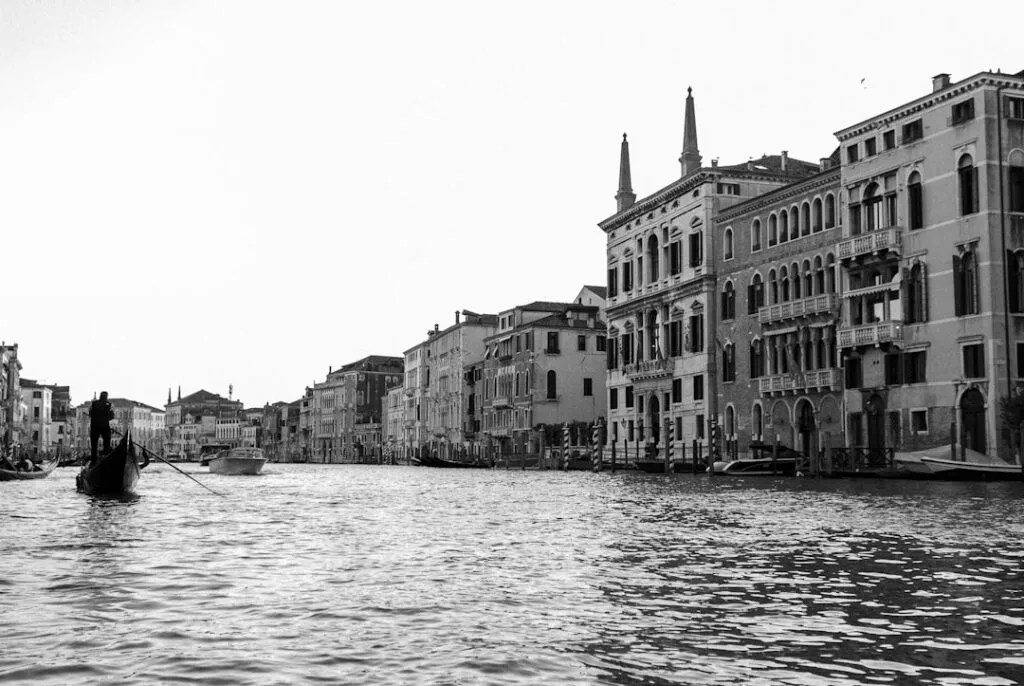
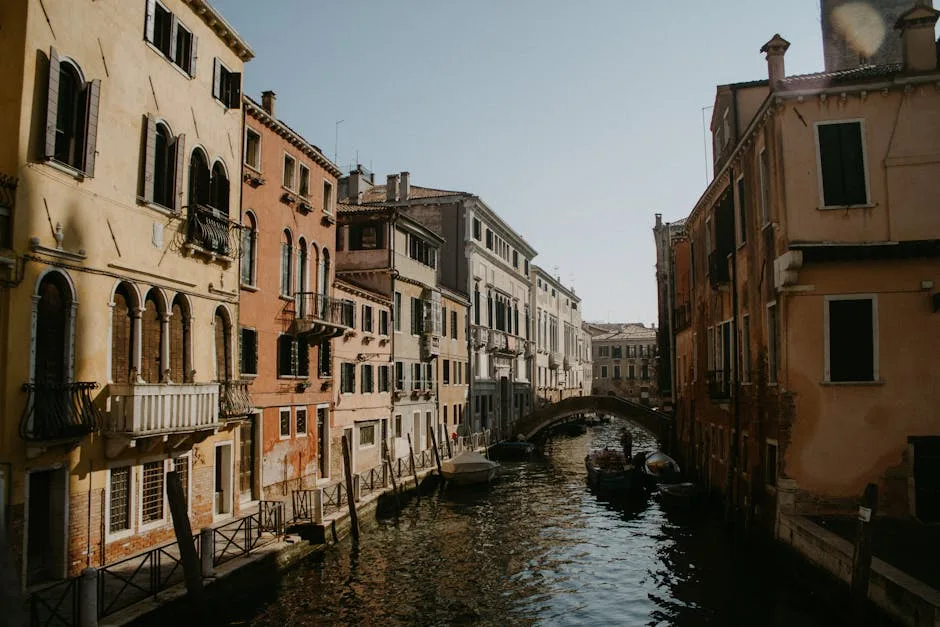
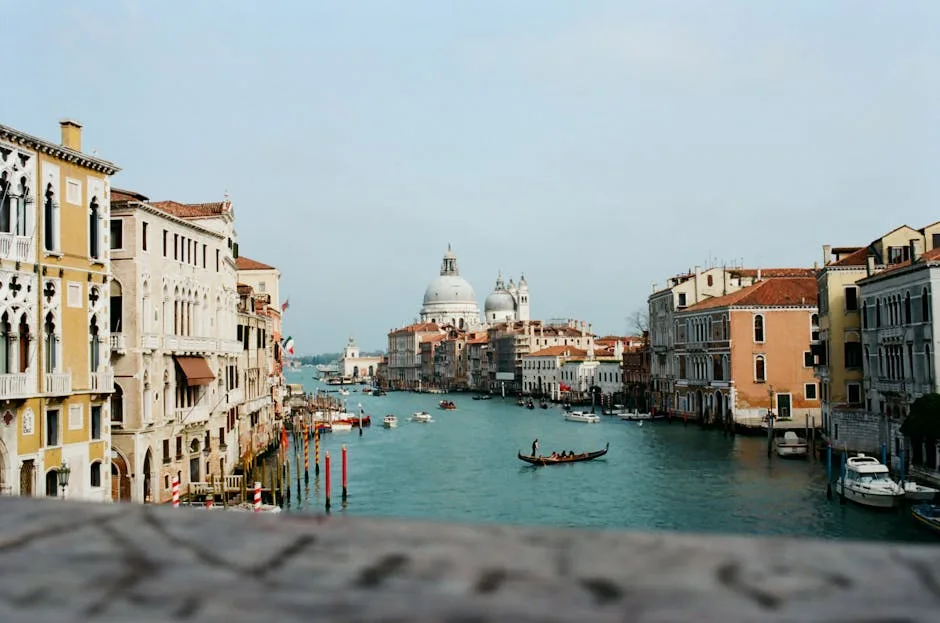
Taking a traghetto is not just moving from point A to point B; it’s gifting yourself sensory moments. The proximity to façades lets you study architectural details that are hard to see from a bridge: stone flourishes, wrought-iron balconies, surprising traces of successive restorations and Latin inscriptions partially erased by time. The mixed scent of sea air and wet wood, the lapping against the hull, the ferryman’s breath as he coordinates the maneuver: everything becomes material for observation.
Photographically, favor the golden hours — sunrise and sunset — for warm contrasts. Move closer to less busy shores to capture perfect reflections in the water. If you’re a photographer, politely ask the barcaiolo if you can hold still for a moment to frame a shot: many will agree with a smile, and some know the best angles. Be mindful of harsh reflections: a polarizing filter can help control glare on the water.
On the human side, watch local life: delivery workers hauling boxes, hurried children, friendly old vendors. These scenes guarantee rich storytelling photos. For safety and local respect, avoid disturbing regular users and don’t monopolize the boat for extended photo sessions; the crossing should remain an efficient public service.
Click here to book a professional photo shoot in Venice
Practical tips and recommendations for travelers
Before boarding, here are concrete tips to make your traghetto experience as smooth and pleasant as possible.
- Tickets and payment: Have small coins (€0.50) or a €1/€2 coin. Not all traghetti accept cards. The fare is often symbolic: between €0.50 and €2.00.
- Accessibility: The quays sometimes consist of unstable gangways and steps; if you have reduced mobility, favor main lines served by bridges or ask at the ufficio turistico (Tourist Information).
- Connections: To reach Stazione di Venezia Santa Lucia (Piazzale Roma) or Piazza San Marco, combine traghetto and vaporetto. For example, a trip toward Piazza San Marco might involve a short traghetto crossing followed by a vaporetto or a walk.
- Safety: Board and disembark when the boat is securely moored. Barcaioli are experienced, but exercise caution, especially in windy conditions.
- Etiquette: Respect locals: avoid loud noise and give priority to regular users boarding quickly.
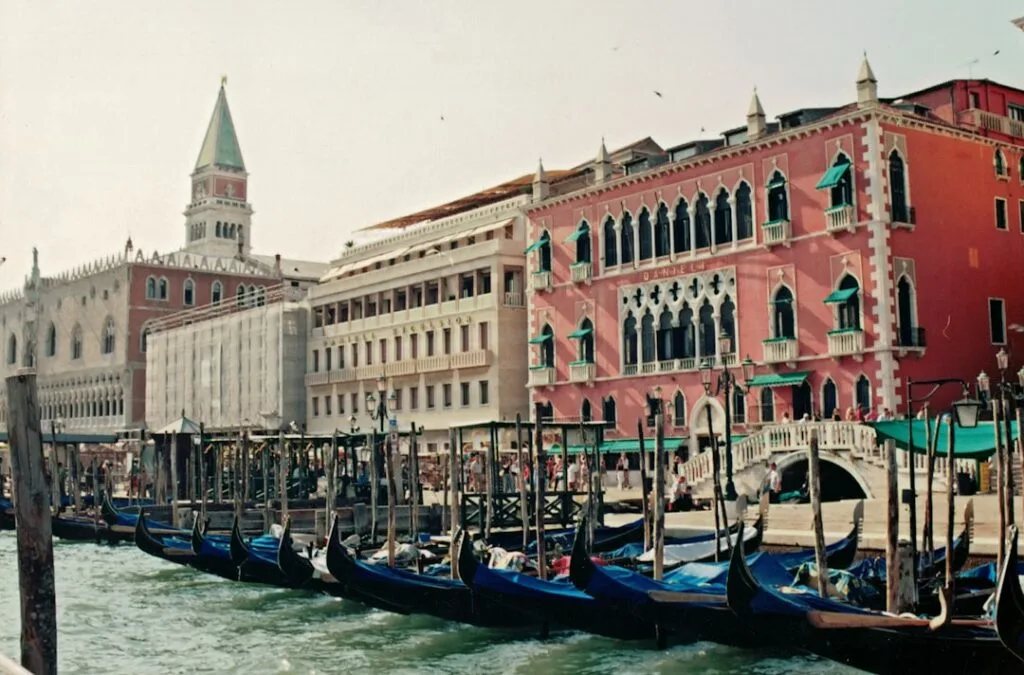
Finally, combine a traghetto crossing with targeted visits: after crossing near the Piazzetta San Marco you can visit the Doge’s Palace (Piazza San Marco, 1, 30124 Venezia VE); after a trip from Dorsoduro, explore the Basilica di Santa Maria della Salute (Dorsoduro, 1, 30123 Venezia VE), usually open from 9:00 to 17:30 and sometimes later for special events. Opening hours change with the season; check official sites for exact times and entry fees (e.g. Doge’s Palace prices vary, combined tickets around €25–30 in 2024).
Click here to book a guided skip-the-line Doge’s Palace tour
Click here to book your ticket for St Mark’s Basilica and the Campanile
Curiosities and anecdotes about the traghetti
Traghetti come with little stories and anecdotes that enrich the visit. For example, the barcaioli’s family traditions sometimes show up as nicknames for certain crossings, or spontaneous songs during local festivals. Some traghetti have carried historical figures, or served as everyday routes for artists who commuted between workshops on either bank.
There are also architectural curiosities visible from the crossings: stone « coat hooks » on façades — sculpted rings where boats were once tied — nearly faded frescoes, or signs of urban reworking like lines of amphorae and stone. Maritime clearances have occasionally revealed modest archaeological elements that tell the story of the city’s evolution.
Lastly, the place of the traghetti in local culture is tangible: guides and residents talk about them as a Venetian trait. The festas (religious and popular festivals) offer scenes where traghetti play both logistical and symbolic roles, transporting processions, decorations or even offerings. This link between daily use and ceremony is part of Venice’s magic.
Click here to book an Evening Crimes, Legends & Mysteries Tour
Conclusion
Venice’s traghetti are more than mere transport: they’re a gateway into the city’s living memory. Between practical utility and the poetry of the movement, they let you read the city differently — by observing façades, listening to daily life and sharing a fragment of existence with Venetians. For a modest price — often between €0.50 and €2.00 — you gain access to an experience mass tourism can’t fully reproduce: the intimacy of a crossing, the eye for details, the immediate human contact.
On your next stay in Venice, plan a few crossings: choose morning trips for soft light, pair them with specific visits like Piazza San Marco (Piazza San Marco, 30124 Venezia VE) or the Basilica di Santa Maria della Salute (Dorsoduro, 1, 30123 Venezia VE), and remember to respect local customs. Bring small coins to pay, a jacket for the breeze over the water, and your curiosity to chat with the barcaioli.
In the end, the traghetti are a reminder that Venice is lived from the water. They show how the city preserves simple, functional practices while offering visitors moments of grace. Boarding a traghetto, even briefly, is agreeing to slow down, listen to the lapping, watch the reflections and feel, for the length of a trip, rooted in the history of a city like no other. Safe travels and enjoy your crossing.