





Introduction: Why a Venice weather calendar is essential
Venice, La Serenissima, draws millions of visitors each year for its sparkling canals, Gothic palaces and that one-of-a-kind light. But the city of the Doges is also famous for acqua alta — those exceptionally high tides that flood squares, quays and sometimes even museums. Understanding and anticipating these events isn’t just about comfort; it’s crucial for your safety, your luggage and your itinerary. A precise, Venice-focused weather calendar will help you pick the best days to visit St. Mark’s Basilica, glance at the Rialto Bridge or cross Piazza San Marco without having to don rubber boots.
A weather calendar tailored to Venice combines several factors: forecasts for the Adriatic Sea, wind direction and strength (especially the sirocco and bora), air pressure, visitor numbers and the operation of the MOSE system — the mobile barriers designed to reduce the impact of very high tides. Using these data, you can plan visits around low-risk time slots, book museums or restaurants when they’re accessible, and choose alternate routes if main tourist areas are partially flooded.
This article is a practical guide to incorporating Venice weather into your schedule: how to read local bulletins, which apps to check, which spots are usually affected and how to interpret alerts from the Comune di Venezia (Venice city council). We’ll also list exact addresses — basilicas, museums, train stations — with typical opening hours and prices so you can adapt your plans. Finally, you’ll find local tips to minimize the hassle during acqua alta: alternate routes, useful services like temporary walkways, boot shops and luggage storage solutions.
Learning Venice’s weather is also about immersing yourself in a local culture that has learned to live with the sea. Venetians read the sea and sky with a care visitors can pick up in a few simple habits: check the tide the night before, plan trips for the morning when the water is often calmer, and favor vaporetto connections over walking when high-sea forecasts are in place. More than a simple weather calendar, this guide is a travel playbook for smart visiting in Venice — avoiding flood traps while getting the most out of the lagoon’s urban magic.
Understanding acqua alta: causes, typical timing and alerts
Acqua alta is caused by a combination of factors: astronomical tide (moon phase), easterly or south-easterly winds (sirocco), low atmospheric pressure and meteorological patterns over the Adriatic Sea. The highest tides often occur in autumn and winter, from September through February, with a frequent peak in November–December. Local navigation and topography — narrow canals, shallow lagoon — then amplify water rise in the historic center.
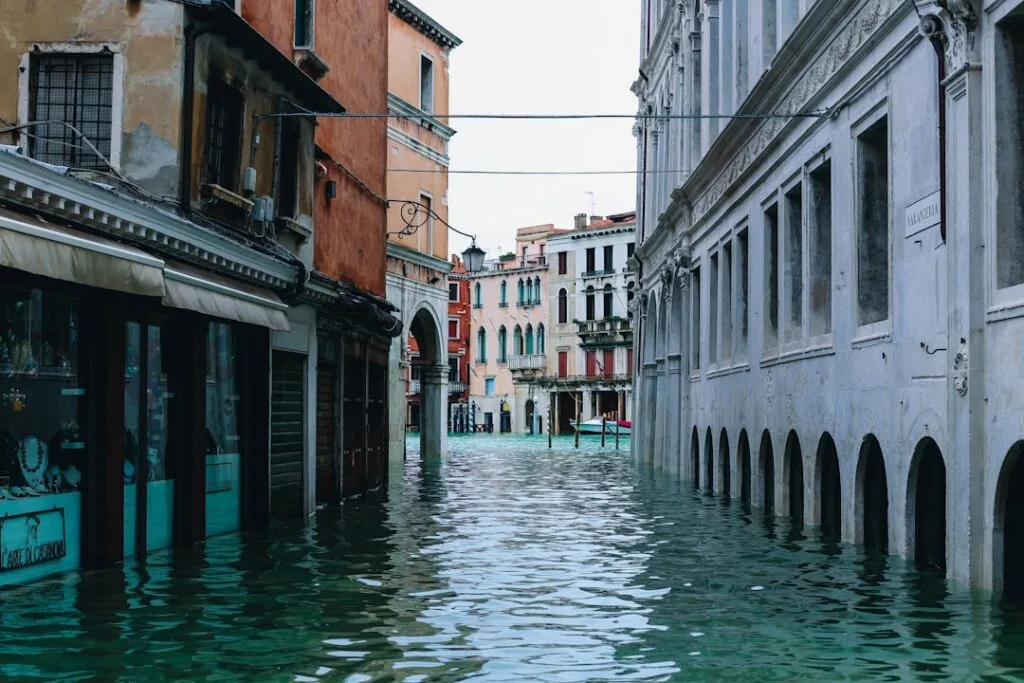
The Comune di Venezia publishes daily bulletins on the « Previsioni Maree » (tide forecasts) page and issues alerts via the official app and light panels along the Riva degli Schiavoni. An « orange » alert means a high probability of localized flooding (typically 100–120 cm), while « red » implies significant danger (>140 cm) and closures of public areas. Learn these thresholds: 80 cm starts flooding low-lying areas like parts of Piazza San Marco; at 110–120 cm, many pedestrian routes are often submerged.
Practical example: if the forecast predicts a 120 cm tide at 10:00 on a Tuesday in November, it’s better to move a morning visit to another time (which may be lower) or book an indoor guided tour like the Doge’s Palace. For transfers, favor the ACTV vaporetto from Venezia Santa Lucia (Piazzale Roma, 1) rather than walking along the Riva or through the Arsenal area.
Finally, the MOSE system (Modulo Sperimentale Elettromeccanico) — made up of movable barriers at the three lagoon inlets — aims to reduce the impact of extreme tides. It’s activated during major alerts, but it doesn’t always prevent localized flooding caused by waves and heavy rain. Treat local bulletins as your primary source and always allow an extra half day for important transfers.
 Click here to book your skip-the-line ticket to the Doge’s Palace
Practical month-by-month calendar: when to visit and when to avoid
Planning your trip to Venice around a weather calendar will help you avoid the worst acqua alta episodes. Here’s a month-by-month guide with practical recommendations for main activities and the best times of day.
– January to March: cold season, alternating north and south winds. Moderate to high risk of acqua alta in January–February. Recommendation: schedule indoor visits (St. Mark’s Basilica, Doge’s Palace) on weekdays and favor mornings for vaporetto rides. For example, Basilica di San Marco (Piazza San Marco, 328, 30124 Venezia VE) typically opens from 9:30 to 17:00; entry to the nave is free, but access to museums and the Pala d’Oro costs around €5–7 depending on season.
– April to June: pleasant spring, lower risk of acqua alta but rising tourist numbers. Afternoons can be crowded; prioritize morning visits to the Palazzo Ducale (Doge’s Palace, Piazza San Marco, 1, 30124 Venezia VE). Hours: in high season often 8:30–19:00; standard ticket ~€25 (combined civic museums may vary). Book ahead to avoid lines and weather surprises.
– July and August: hot, low risk of acqua alta but heavy tourist crowds. Canals are often calm; just check the local forecast because summer storms can bring intense rain and run-off. If you plan to visit Murano (Museo del Vetro, Fondamenta Giustinian, 8, 30141 Murano), typical hours are 10:00–17:00, tickets €10–15.
– September to December: high-tide season returns, with a peak in November. As November approaches, check the « Citta di Venezia Previsioni Maree » daily and have indoor alternatives ready for days flagged orange or red. Evening walks on the Rialto Bridge (Ponte di Rialto, Sestiere San Polo, 30125 Venezia VE) are beautiful in the morning and late afternoon — avoid them during high tides.
Click here to discover Murano and a glassblowing demonstration
Alternate routes, useful addresses and logistics tips
When the tide rises, some tourist arteries become impassable. Here are alternate routes and practical addresses to know, with opening times and local tips to help you adapt quickly.
– Ferrovia / Piazzale Roma train hub: Stazione di Venezia Santa Lucia, address Ponte delle Guglie, 30121 Venezia VE. If Piazza San Marco is flooded, take the vaporetto from the Ferrovia stop. ACTV fares: single ticket 90 minutes = €9 (2024 rate), 24-hour pass ~€25. Schedules vary, but main lines run roughly from 05:00 to midnight; some 24-hour lines exist (notably lines 1/2 depending on season).
– Piazza San Marco: Piazza San Marco, 30124 Venezia VE. In case of acqua alta, the central area is equipped with temporary walkways (passerelle) and warning signs. The Basilica di San Marco (Piazza San Marco, 328) may close temporarily; check on-site or online before heading over. For visits, consider dropping bulky backpacks or using a left-luggage at Piazzale Roma (paid lockers).
– Doge’s Palace (Palazzo Ducale): Piazza San Marco, 1, 30124 Venezia VE. Typical hours: 8:30–19:00 (last entry varies), combined civic museums ticket around €28. If quays are flooded, access may only be possible by boat; follow staff directions.
Click here to purchase a Venice City Pass with museums
– Local services: « Acqua Alta Shop » (Calle Lunga Santa Maria Formosa, 5176, 30122 Venezia VE) sells rubber boots and accessories (boots €25–60), handy during alerts. For luggage, « Luggage Storage Venice » at Piazzale Roma (address Piazzale Roma, 1) offers lockers from €6–10 per day. Keep these addresses handy.
Click here to explore the Grand Canal on a boat tour
On-the-ground practical tips: gear, behavior and safety
Preparing means traveling light but smart. Here are concrete local tips to reduce the impact of acqua alta on your trip.
– Essential gear: a pair of rubber boots (on sale €25–60), a waterproof pouch for documents and devices (€10–30), and protection for cameras. Venetians also use lightweight waterproof capes (€10–25) rather than umbrellas when it’s windy.
– Behavior during an alert: don’t cross flooded areas if the water reaches or exceeds knee height — currents can be stronger than they look. Respect barriers and follow announcements from municipal staff. In an emergency, local numbers and tourist help points are located near hubs like Stazione Santa Lucia and Piazza San Marco.
– Booking and flexibility: reserve indoor visits (St. Mark’s Basilica — museum access, Doge’s Palace) and restaurants (Trattoria Alla Rivetta, Fondamenta dei Ormesini) for morning slots when the weather is uncertain. If your flight or train is affected, allow at least a 4–6 hour buffer for transfers, as vaporetti can be delayed.
– Photo tips: the best light is early morning and late afternoon, but avoid these times if a high-tide alert is forecast. To shoot safely, find elevated viewpoints like the Campanile di San Marco (Piazza San Marco, 30124 Venezia VE) — paid lift access costs roughly €10–12 and provides an unobstructed view without flood risk.
Click here to book your Campanile ticket
Conclusion: Smart travel in Venice — beauty with caution
Venice remains a unique destination where history, architecture and the lagoon meet. A well-prepared trip takes local weather and the risk of acqua alta into account. Relying on the Comune di Venezia tide bulletins, knowing how to read orange and red alerts, and having backup plans — vaporetto routes, indoor visits and luggage storage — will minimize disruption and protect your experience.

Click here to book priority access to St. Mark’s Basilica
Practically speaking, adopt a simple routine: check the weather and tide the night before, book must-see visits for the morning, pack light for damp conditions and keep important documents in a waterproof pouch. Keep key addresses and hours handy: Basilica di San Marco (Piazza San Marco, 328 — usually open 9:30–17:00; museum access €5–7), Palazzo Ducale (Piazza San Marco, 1 — open ~8:30–19:00; combined tickets ~€28), Stazione di Venezia Santa Lucia (Ponte delle Guglie, 30121) for transfers, and local shops like « Acqua Alta Shop » to get equipped fast.
Finally, remember that acqua alta is part of Venice’s living character. With a little foresight and these practical pointers, you’ll not only avoid unpleasant surprises but also enjoy the city’s shifting light and water — sometimes even turned into a fleeting spectacle by a high tide. Safe travels and stay cautious: Venice can be unpredictable, but it’s unforgettable.