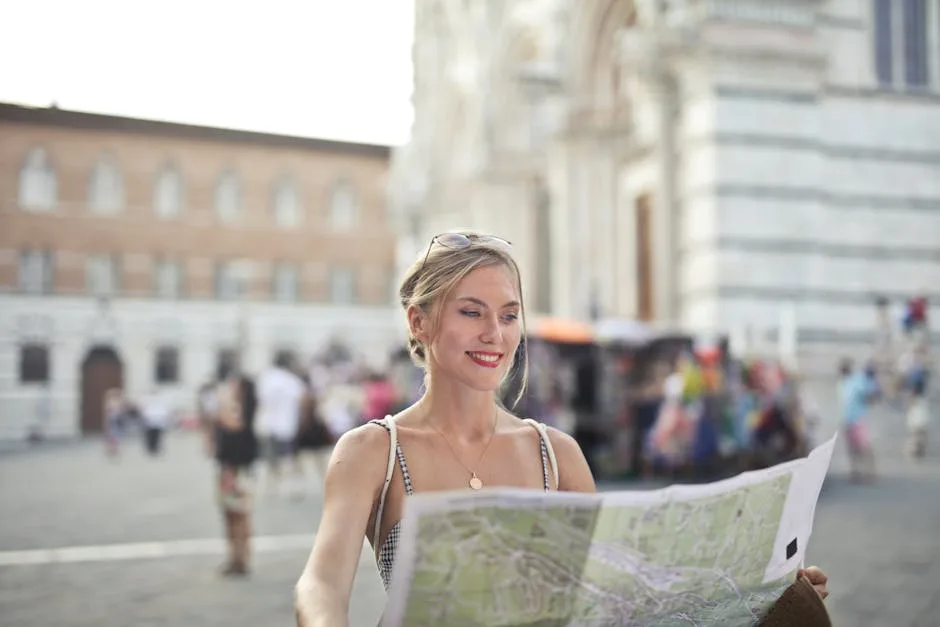






Introduction: Murano and Burano — two Venetian stops that raise the guided-or-independent question
Venice isn’t just the Serenissima of canals and palaces: just a few vaporetto stops away lie two tiny island worlds, each very different yet as captivating as St. Mark’s Square. Murano, famous for its centuries-old blown glass, and Burano, known for its colorful houses and lace-making tradition, each offer their own atmosphere and distinct sensory experiences. Modern travelers often face a practical and aesthetic choice: book a guided tour or opt for a free, self-directed visit — alone or in a small group. That decision will affect your budget, pacing, depth of knowledge, and even how you experience the islands.
In this introduction I want to outline the stakes: what added value do you expect from a local guide? How much does a guided visit cost compared with going it alone? Which spots are must-sees, at what times, and how do you make the most of a half-day if that’s all you have? This article aims to answer those questions in a practical, immersive way, providing full addresses, typical opening hours, prices in euros, on-the-ground tips and recommended routes. You’ll also find points of comparison for the options (island tours, glass-blowing demos, lace workshops, museums, churches, artisans), recommendations to avoid tourist traps, and tips to get the most out of each island depending on your priorities — photography, artisan shopping, history, or simply wandering.
Before diving into the details, keep two principles in mind: first, the season (high/low) affects opening hours and crowd levels; second, logistics (ACTV vaporetto schedules, ticket validation, connections) often determine whether a day trip succeeds. If you’re torn between comfort and independence, know that hybrid solutions exist: half-day guided tours focused on Murano’s glass followed by free exploration of Burano, or the reverse. This complete guide will help you choose wisely and prepare a memorable experience, whatever you decide.
 Click here to book a boat trip to Murano and Burano

Why visit Murano and Burano? Cultural and aesthetic value
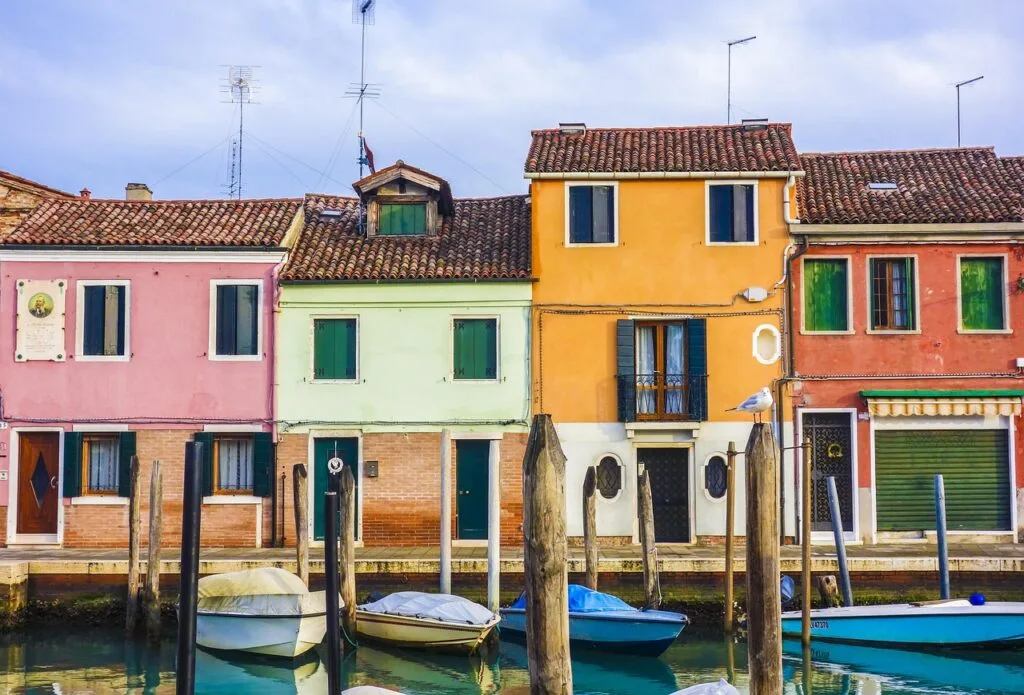
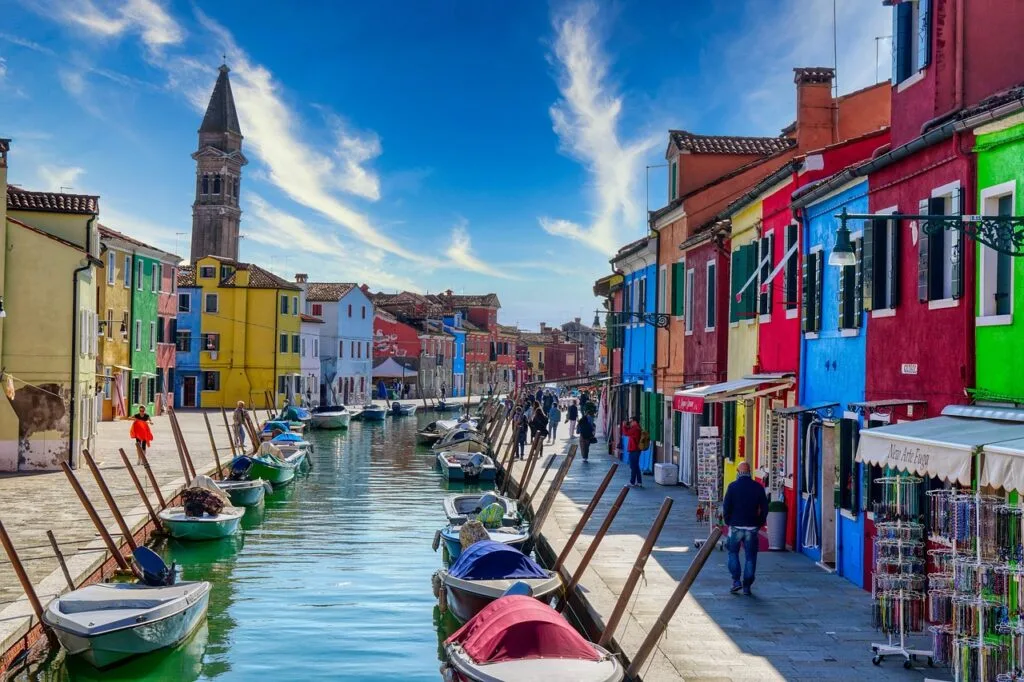
Visiting Murano and Burano isn’t just ticking two boxes on a Venice map: it’s access to two deeply rooted crafts and urban landscapes that tell the lagoon’s story. Murano is synonymous with glass blowing. Since the 13th century, master glassmakers have developed unique techniques (murrina, filigrana, lattimo, sommerso) that made the island famous across Europe. Burano, meanwhile, is a fishing village whose colorful façades were once used to spot homes from the sea. Burano lace (merletto) has enjoyed centuries of prestige: the pieces, preserved and displayed today, bear witness to an intricate and refined craft.
Visually and photographically, Murano offers workshop interiors where the red glow of the furnaces mixes with the hot glass’s transparency, while Burano is an outdoor kaleidoscope: pink, yellow and green façades, reflections in the water, narrow alleys, small wooden bridges and painted shutters. For history lovers, Murano features religious monuments like the Basilica dei Santi Maria e Donato (Piazza San Donato, 30141 Murano, Venezia), famous for its mosaics and Romanesque façade; Burano has the Campanile di San Martino (Piazza Galuppi, 30142 Burano, Venezia), slightly leaning, and the Museo del Merletto to dive into the lace history.
Practically speaking, these islands are easily reached from Venice by ACTV lines (vaporetti) from Fondamenta Nove or Piazzale Roma (travel time usually 30–45 minutes to Murano, 45–60 minutes to Burano depending on the line). The visiting options — guided or independent — each have advantages: a guided tour guarantees historical and technical explanations, smoother access to workshops and sometimes private demonstrations; a self-guided visit leaves room to discover at your own pace, take photos without rush and negotiate purchases directly with artisans.
Click here to Explore Murano glass and Burano colors with a guide
Guided tour: benefits, typical prices and sample itinerary
A guided tour appeals for many reasons: time savings, historical anecdotes, privileged contacts with artisans and, often, logistical handling (meeting point, vaporetto tickets included or private boat transfer). Options range from standard group tours to private visits. Here are some practical and numerical benchmarks to evaluate this option.
Indicative prices:
- Half-day group tour Murano + Burano: usually between €30 and €60 per person (including English/French-speaking guide, sometimes vaporetto ticket).
- Private tour (2–6 people): between €120 and €350 depending on duration, language and season (often private boat included).
- Glass-blowing demonstrations: some furnaces offer a free demo at the entrance, but private or reserved workshops can cost €20–€60 per person depending on duration and the piece made.
These rates are indicative and vary by season and provider. Full guided tours often include pickup at a central point (e.g. Fondamenta Nove), return by vaporetto or boat, a visit to a glass workshop with demonstration, an introduction to the Museo del Vetro (Museo del Vetro, Fondamenta Giustinian 8, 30141 Venezia Murano) and free time in Burano.
Typical half-day guided tour schedule:
- Meet at Fondamenta Nove or a pre-arranged point in Venice.
- Transfer by ACTV vaporetto (or private boat) to Murano: visit a glass workshop with demonstration (30–45 minutes) and an overview of the Museo del Vetro (or at least its exterior and an explanation); Museo del Vetro entry is often €8–€10, indicative hours 10:00–17:00 (check seasonally).
- Cross to Burano: guided walk through the village, explanation of the lace tradition and the Museo del Merletto (Fondamenta Angelo Della Pila 9, 30142 Burano); entry €3–€6, indicative hours 10:00–17:00.
- Free time for lunch and wandering before returning to Venice.
Concrete advantages of having a guide:
- Historical and technical knowledge: medieval, economic and social context linked to the islands.
- Easier access: some furnaces prioritize groups and arrange dedicated demonstrations.
- Time savings: optimized routes, no hunting for vaporetto connections amid the crowds.
- On-site safety and practical advice: where to buy without getting overcharged, which pieces merit a certificate of authenticity, export formalities for big purchases.
Click here to book a half-day Murano and Burano tour
Self-guided visit: recommended route, hours, costs and creative freedom
A self-guided visit is for those who like to take their time, improvise, shoot lots of photos and haggle directly with artisans. It’s usually cheaper than a guided tour but requires better preparation. Here’s an optimized route for a half-day to a full day, with addresses, indicative hours and budgetary details.
Basic costs to plan for:
- Single ACTV vaporetto ticket: about €8.00 (valid 75 minutes); check current fares with ACTV. The trip from Fondamenta Nove to Murano takes about 20–30 minutes, to Burano about 45–60 minutes depending on the line.
- Meals: lunch in a bacaro or local osteria in Murano/Burano: plan €12–€30 per person depending on the place.
- Museums: Museo del Vetro (~€8–€10), Museo del Merletto (~€3–€6).
- Souvenirs: Murano glass and Burano lace prices vary widely; budget according to quality and size (from €10 for a small memento to several hundred euros for an art piece).
Suggested itinerary for a full self-guided day (early start recommended):
- Morning: depart Venice (Fondamenta Nove or Piazzale Roma) for Murano. On arrival, head to the Basilica dei Santi Maria e Donato (Piazza San Donato, 30141 Murano). Indicative opening hours: 09:00–18:00 (entry often free or by donation).
- Next, visit a public glass workshop (look for posted demo times; most major furnaces display demonstration times in their windows). If you want to enter the Museo del Vetro (Fondamenta Giustinian 8), allow 45–60 minutes.
- Lunch: try a local osteria (e.g., Osteria al Duomo near the basilica — check address and hours). Then take the vaporetto to Burano (the crossing offers picturesque lagoon views).
- Afternoon in Burano: wander around Piazza Galuppi, visit the Museo del Merletto (Fondamenta Angelo Della Pila 9), stroll along the colorful canals, take photos and shop for lace. Most shops open around 10:00 and close between 17:00 and 19:00 depending on season.
- Return: take the vaporetto back to Venice in the late afternoon to avoid the tourist rush.
Advantages of self-guided visits:
- Total freedom over route and duration.
- Ability to linger in a workshop or café you love.
- Better bargaining room for purchases if you compare multiple shops.
- A more intimate, less « packaged » experience.
Disadvantages: you may miss valuable historical explanations, arrive outside workshop demo times, and you’ll need good time management to avoid missing the last vaporetti.
Click here to book a beginner’s glass-blowing workshop
Must-see spots in Murano and Burano: addresses, opening hours and practical notes
Here’s a selection of places you shouldn’t miss, with full addresses, indicative hours and known prices at the time of writing. Remember hours can vary by season and public holidays; it’s best to check official sites before you go.
Murano:
- Museo del Vetro (Murano Glass Museum)
Address: Fondamenta Giustinian 8, 30141 Venezia – Murano, Italy.
Indicative hours: 10:00–17:00 (closed some Mondays off-season).
Price: around €8–€10 for adults. Discounts for students/seniors may apply.
Description: Exhibits of historic and contemporary pieces, explanations of glassmaking techniques, a didactic route inside a Gothic palace overlooking the canal. - Basilica dei Santi Maria e Donato
Address: Piazza San Donato, 30141 Murano, Venezia.
Indicative hours: 09:00–18:00 (entry generally free or by donation).
Price: donation (entry free but a contribution is recommended).
Description: A 12th-century church famous for its mosaic floor and Byzantine apse — a perfect place to feel the island’s historical continuity. - Furnaces (Venini and local workshops)
Address: various locations on the island (workshops often display names and hours at their entrances).
Hours: demonstrations often in the morning and early afternoon; check on site.
Price: demo may be free; paid workshops for making a piece can range from €20 to €60+.
Burano:
- Museo del Merletto (Lace Museum)
Address: Fondamenta Angelo Della Pila 9, 30142 Burano, Venezia.
Indicative hours: 10:00–17:00 (may vary by season).
Price: about €3–€6.
Description: Collections of historic and contemporary lace, explanatory panels on the techniques, and sometimes artisan demonstrations. - Piazza Galuppi
Address: Piazza Galuppi, 30142 Burano, Venezia.
Hours: public square, accessible all day.
Price: free.
Description: The central square lined with cafés and shops, ideal for observing local life and the leaning bell tower of San Martino. - Lace workshops and artisan shops
Address: scattered along the Fondamenta (check the small plaques on shop fronts).
Hours: generally open 10:00–18:00; seasonal.
Price: authentic lace is an investment — small pieces from €20, museum-quality pieces several hundred euros.
Click here to buy your ticket for the Museo del Vetro
Local practical tips: transport, shopping, safety and timing
Transport and tickets:
- ACTV tickets: buy vaporetto tickets at tabacchi, official machines or via the ACTV app. A single ticket costs about €8.00 (valid 75 minutes); there are 24/48/72-hour passes. Always validate your ticket at the validation point before boarding.
- Private boat: prices vary widely. For a private round-trip transfer for 2–4 people expect often between €120 and €250 depending on season. Water taxis are fast but expensive.
- Timing: leave early (between 08:30 and 09:30) if you want to enjoy workshops before tour groups arrive and find a table in Burano without long waits.
Shopping and authenticity:
- Murano: ask for a certificate of authenticity for signed glass pieces marked « Vetro Artistico Murano » or equivalents; avoid street vendors. Prices vary greatly depending on quality and signature.
- Burano: for lace, ask about the method (merletto a fuselli, needle lace) and request provenance and an invoice. Low prices often hide machine-made imitations.
- Haggling: possible for on-the-spot purchases but be respectful — small workshops and artisans rely on these sales.
Safety and comfort:
- Shoes: wear comfortable, non-slip footwear; alleys can be cobbled and sometimes wet.
- Weather: in summer bring water and sun protection; in autumn/winter lagoon winds can make crossings chilly — a windproof jacket is useful.
- Photography: respect workshops and artisans by asking permission before taking close-up photos of their work.
Click here to book a private boat tour of Murano and Burano

Conclusion: which choice for which traveler?
The dilemma « guided tour or self-guided visit to Murano and Burano » has no universal answer: it depends on your available time, budget, appetite for history and technique, and taste for improvisation. If you have a short window (half a day) and want to make the most of demonstrations and contextual explanations, a well-chosen guided tour (group or private) adds great value. It maximizes encounters with master glassmakers, makes workshop access easier, and avoids time lost to vaporetto schedules or searching for information on site.
On the other hand, if you’re a slow traveler, photographer, careful collector or simply love to wander, self-guided visiting will give you precious freedom: you decide where to stop, how long to linger by a workshop, and you can compare craft offers more thoroughly. But autonomous visiting requires minimal preparation (ACTV vaporetto schedules, identifying the museums you want to visit, cash for potential purchases and choosing a sensible route).
Practically, a hybrid option is often the best: book a half-day guided experience in Murano for the technical demo and historical overview, then save the afternoon for a free, colorful stroll through Burano. In any case, bring contact details and addresses: for example, the Museo del Vetro (Fondamenta Giustinian 8, 30141 Murano) and the Museo del Merletto (Fondamenta Angelo Della Pila 9, 30142 Burano) as fixed reference points, and don’t forget ACTV tickets for your crossings (single ticket about €8 at the time of writing). Finally, respect local artisans, request certificates of authenticity for valuable pieces and, above all, give yourself time to admire: Murano and Burano are complementary sensory experiences — one warm and bright with furnaces and glass, the other soft and colorful in its alleys and lace — deserving of listening, observation and patience.