





Introduction: one day to feel, touch and bring back Venice
Venise en une journée peut sembler impossible si l’on veut tout voir, mais si l’on vient avec l’objectif précis de faire du shopping authentique — rapporter des objets qui racontent une histoire plutôt que des souvenirs banals — alors 24 heures bien pensées suffisent pour quitter la lagune avec des trésors. Cet itinéraire n’est pas celui des chaînes internationales ni des boutiques de souvenirs surpeuplées près de la Piazza San Marco. Il privilégie les ateliers d’artisans, les marchés alimentaires, les verreries de Murano (version accessible en boutique à Venise même), les librairies anciennes et les petits métiers de l’île : masques artisanaux, bijoux en verre, étoffes teintes à la main, carnets reliés, produits gastronomiques vénitiens.
Venice is a city where every object holds the memory of a place: silk mirrors the water, glass captures the light, leather softens with canal salt. In a day you can have the full sensory experience — hear gondolas lapping, smell fish at the market, feel the texture of a papier-mâché mask, sip a spritz in a bacaro where locals take their break. This guide is designed to walk, wander, pop into shops that rarely close early, understand fair prices and negotiate respectfully, know opening hours and exact addresses, and leave with pieces that are truly handmade.
The route starts early at the Rialto market to catch product freshness and meet producers. It winds through the alleys of the San Polo and Dorsoduro sestieri, crosses lesser-used bridges and stops at specific workshops: master glassmakers, mask studios, leather shops and an old bookshop. Each stop includes practical info (indicative prices in euros, usual opening times, local tips and exact addresses) so your day runs smoothly. The aim isn’t to buy for the sake of buying, but to pick items that will bring back the texture and scent of Venice.
Before you go: wear comfortable shoes (cobblestones and bridges), carry a light bag, an offline map or app, and a small stash of cash as some artisans and stalls accept cash only for small purchases. Be prepared to get lost on purpose — the best shops often appear that way. And respect the artisans: ask the story of the object, the materials and the time it took to make. Here, every gesture is a transmission. Happy treasure hunting!
 Click here to create your glass artwork with an artisan
Click here to learn glassblowing in Murano
Morning: Rialto and San Polo — market, delicatessens and first finds
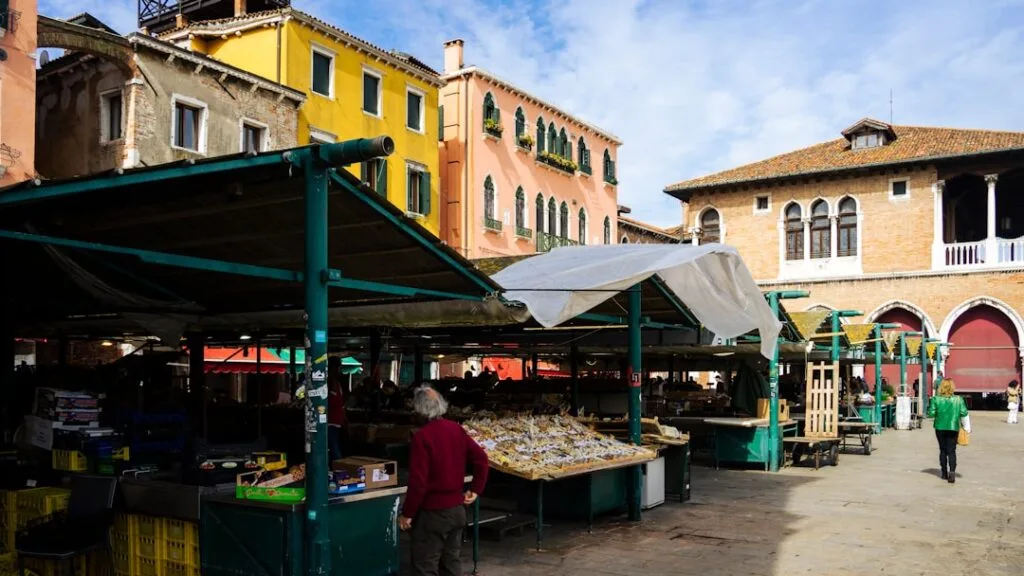
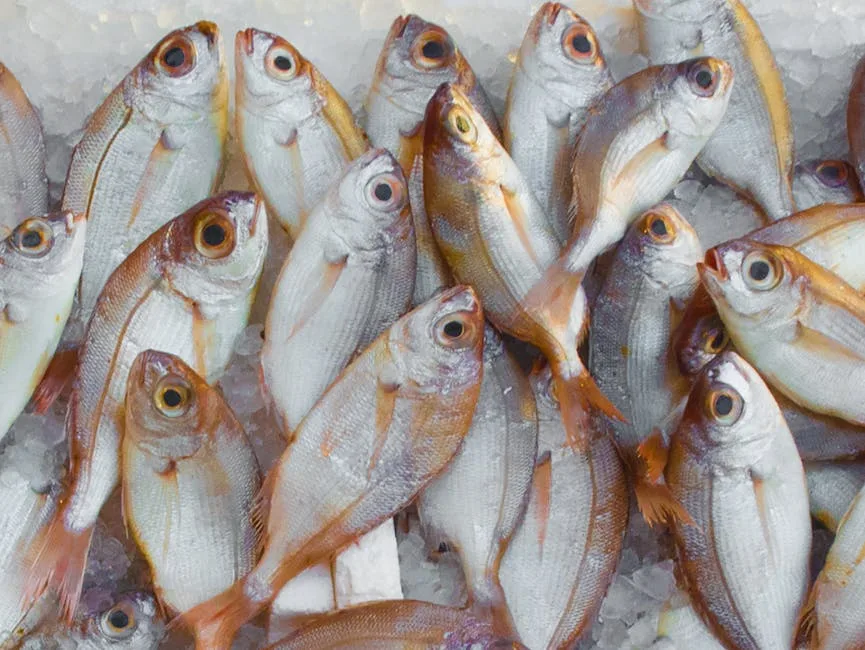
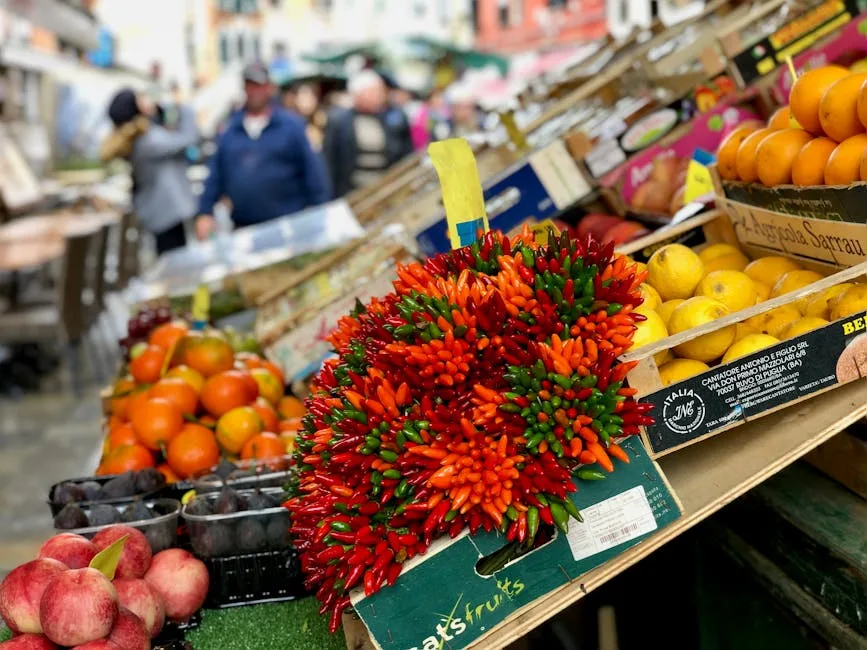
Start early at Mercato di Rialto (Rialto Market), along the Ruga Vecchia and the Campo de la Pescaria, general address: Rialto, Sestiere San Polo, 30125 Venezia. The market opens very early: the fish section is active from 07:00 and most stalls close around 13:00. It’s the best time to watch the fishmongers and buy local produce (fish, seafood, herbs), or simply to photograph the hustle. Prices vary: for example, fresh mussels may cost around €6-€10/kg, sole fillets €25-€40/kg depending on the season. The market is a sensory immersion — salt, smoked fish, vendors’ calls — and a great place to pick up artisanal preserves and local olive oil.
A short walk away, on Mercerie and Calle del Campanile, you’ll find several delicatessens and olive oil shops. Look for La Bottega dei Sapori Veneziani (address: Calle dei Santi Apostoli, 2563, 30125 Venezia, approximate hours: 09:30–19:00), which offers artisanal preserves, smoked salts, Modena balsamic and pasta gift sets. Typical prices: jars of condiments between €6 and €18, small-batch extra virgin olive oil €15–€35 per 500 ml bottle.
Practical tips: arrive before 10:00 to avoid tourist crowds and to snag the best pieces at the market. Bring change: several vendors take cash only and sometimes not cards for small purchases. If you buy fresh products for the next day, ask for an insulated bag; some delis provide one for €2–€4. Finally, if you plan to carry food in your hand luggage, check customs restrictions for your country.
Click here to join the Rialto market and cooking class
Late morning: masks and traditional crafts — San Polo and Ca’ Macana
From Rialto, head up into the sestiere San Polo and look for the best-known mask workshop: Ca’ Macana. Address: Corte della Sconta, Calle della Bissa, 5806, 30124 Venezia (note: alleys and numbers can change; ask for « Ca’ Macana » locally or follow signs). Usual hours: 10:00–18:30 (studio and shop). Ca’ Macana is one of the historic workshops making papier-mâché masks, hand-painted and sometimes inlaid with gold leaf. Prices vary widely: a simple mask may start at €40, a fully worked carnival mask can reach €120–€350 depending on complexity and materials.
The visit to Ca’ Macana is immersive: you can often watch a demonstration of carving and painting and chat about traditional techniques (gesso, embossing, gilding). The artisans explain the process — from molding on a form, to drying, polishing and final gilding. If you have time, book an introductory workshop (lasting ~1.5–2 hours); the price is usually around €60–€90 per person and includes a mask to take home.
Right next door, browse the small shops selling textiles and glass jewelry. For example, Gioielli in Vetro – Bottega Vecchia (address: Calle dei Specchieri, 30125 Venezia, hours: 10:00–19:00) offers handmade Murano glass necklaces, prices: pendants from €45, more elaborate sets €120–€300. Haggle politely: in craft shops prices are often fixed, but a small discount may be possible if you pay cash and buy several items.
Click here to create and decorate a Venetian mask
Recommended experiences to bring Venice home
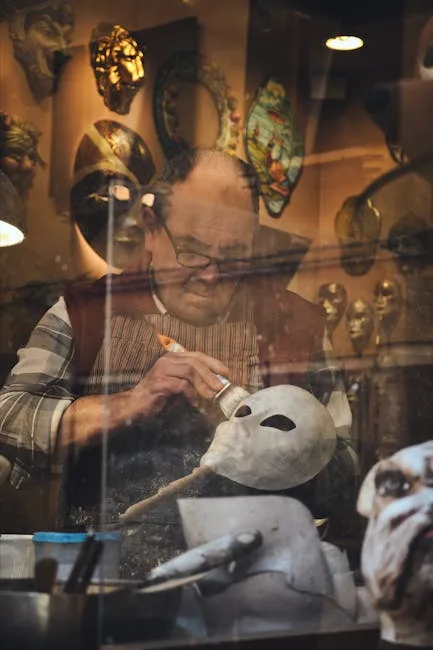
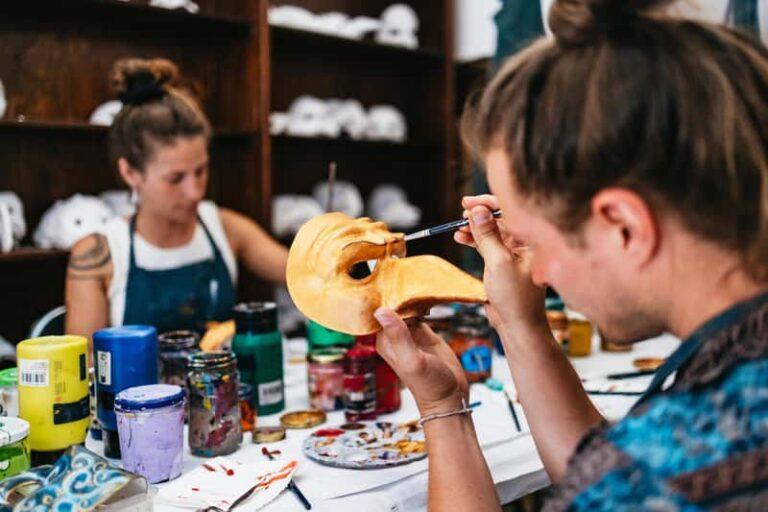
Salt, gold dust and the warm smell of papier-mâché: that exact moment a mask comes to life under your hands. Keeping that memory in your palm means bringing back not just an object but the feeling of having shaped it.
In a morning or an afternoon, pick the experience that will complete your trip: a mask-decorating workshop downtown to leave with your creation, or a more technical immersion in Murano to blow a piece of glass that will catch the lagoon light.
1. Mask painting workshop
Hands-on workshop in the city center: choose a papier-mâché mask from a wide selection and learn the Venetian painting strokes, gilding and finishing techniques to take home your personal creation.
- ⏱️ Duration : 1 hour
- 🚩 Start : Central location (varies)
- 👥 Format : Small-group workshop
- 🗣️ Languages : Italian, French, English
2. Glassblowing workshop (Murano)
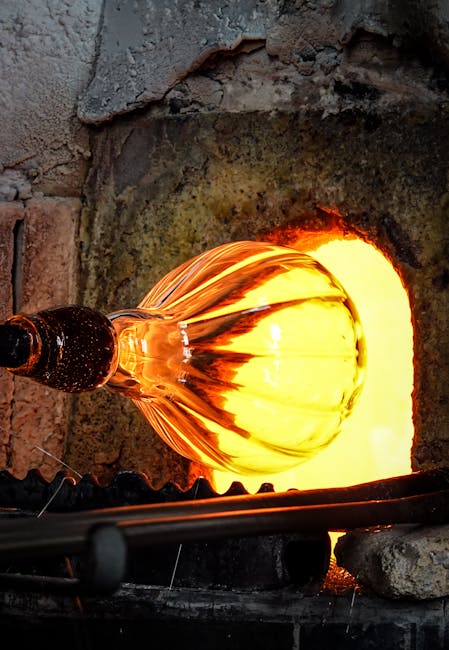
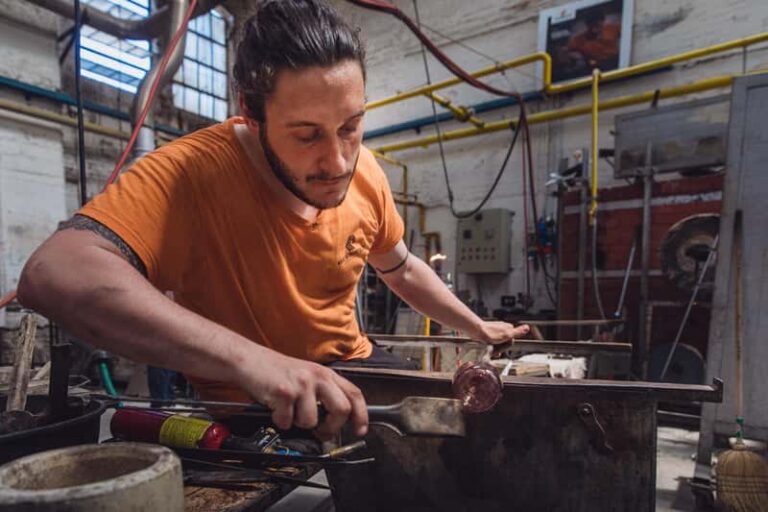
Learn glassblowing from a master glassmaker: demonstration, exercises then the creation of a small vase or tumbler. The object is annealed and can be picked up the next day or shipped to you.
- ⏱️ Duration : 2 hours
- 🚩 Start : Gallery/showroom (Murano)
- 💡 Highlight : Unique object shaped by you
- ⛴️ Transport : Delivery available (extra)
Afternoon: Dorsoduro and the search for glassmakers, bookstores and leather workshops
After a light lunch (a bacaro for cicchetti near the Ponte di Rialto or a spritz on the Fondamenta), head to the sestiere Dorsoduro. Start at the Fondamenta Zattere (south bank of Dorsoduro) and visit glass shops and artisan studios with small local productions. One recommended spot: Vetreria Artistica Colleoni – Fondamenta della Misericordia 2456, 30121 Venezia. Hours: 10:00–18:00. Here you’ll find hand-blown wine glasses, small sculptures and beads: indicative price for a blown glass €35–€80, for a glass jewelry piece €40–€150.
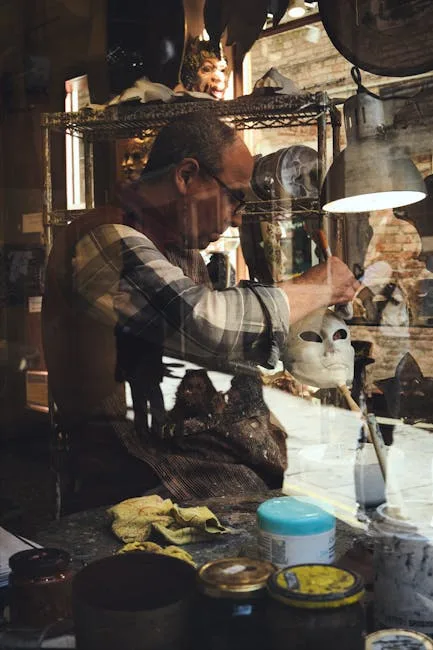
Dorsoduro is also the neighborhood of old bookstores. Stop by Libreria Acqua Alta (address: Calle Longa Santa Maria Formosa, 5176/B, 30122 Venezia, hours: 10:00–20:00) — famous for stacks of books in gondolas and bathtubs. Second-hand novels are affordable (€5–€15) and the atmosphere is very photogenic. It’s the perfect place to find old guides, postcards and print reproductions.
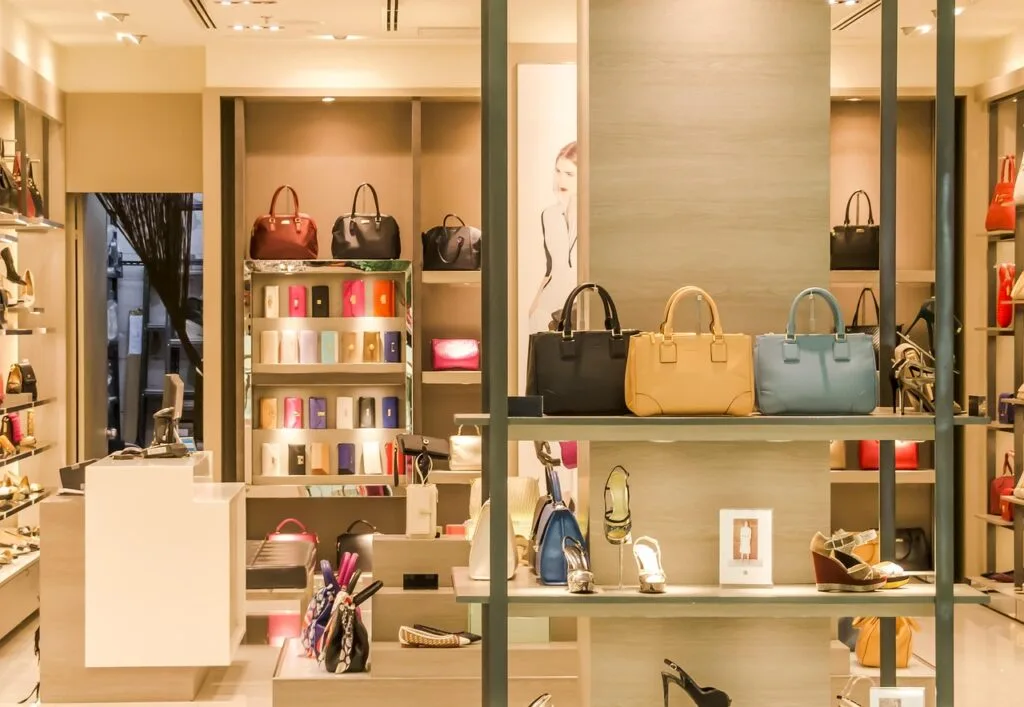
For leather goods, look for a craft leather shop like Pelletteria Veneta (address: Calle Lunga San Barnaba, 2769, 30123 Venezia, hours: 10:00–19:00). Bags made in local workshops typically cost between €80 and €250 depending on size and leather quality. Take the time to touch the leather, feel the stitching and ask if the bag is entirely handmade. Workshops often accept bespoke orders with a lead time of a few days to a few weeks.
Click here to visit Murano and Burano with a glass demonstration
Evening: San Marco and Calle Larga XXII Marzo — high-end shops and a final tasting
In the evening, cross over to Piazza San Marco (address: Piazza San Marco, 30124 Venezia) and the area around the Basilica di San Marco (typical visiting hours: 09:30–17:00 for the basilica, seasonal variations apply). Even though the square is touristy, a few traditional shops and antique dealers are worth a stop. Walk down the Calle Larga XXII Marzo, a street known for luxury stores where you may sometimes find artisans offering limited editions and top-quality pieces.
For a final gastronomic touch, stop by Rizzardini – Pastiglie Artigianali (address: Calle San Marco, 356, 30124 Venezia, hours: 10:00–19:30) for artisanal candies and pastilles in retro boxes — small boxes from €3–€8. Then make one last round at a recommended bacaro, like Osteria Al Portego (address: Calle de le Acque, 30124 Venezia, hours: 12:00–23:00), to enjoy cicchetti (Venetian tapas) at €1.50–€4 each and a spritz at €3.50–€6.
Click here to visit St. Mark’s Basilica with priority access
Practical tips for respectful, savvy shopping
– Payment: always keep some cash for small shops and markets. Cards are accepted in larger stores but some artisans prefer cash. ATMs exist but can be limited depending on the neighborhood.
– Packaging: for fragile items (glass, ceramics), ask for careful wrapping and consider the shop’s shipping service (cost varies, usually €20–€60 depending on destination and size).
– Customs: if you travel outside the EU, check import limits for food products and artifacts. For most European countries personal purchases are free, but some antiques may require export certificates.
– Haggling: be courteous. Prices for handcrafted goods are often fixed; bargaining can work for multiple items but avoid devaluing artisans’ work.
– Transport: choose a bag that protects your purchases; a backpack with a rigid compartment or a lined canvas bag works well. Also consider a small lock if you leave purchases at your accommodation.
Compact itinerary and indicative budget
Suggested itinerary:
- 07:30–10:30: Mercato di Rialto (Rialto, San Polo) — small food purchases and photos
- 10:30–12:30: San Polo — Ca’ Macana (masks), glass jewelry shops
- 12:30–14:00: Lunch in a bacaro (cicchetti + spritz)
- 14:30–17:30: Dorsoduro (Fondamenta Zattere, Vetreria Artistica Colleoni, Libreria Acqua Alta)
- 18:00–20:00: Piazza San Marco and Calle Larga XXII Marzo — luxury boutiques and a final tasting
Indicative budget for a day of artisanal shopping:
- Edible souvenirs and groceries: €15–€50
- Handmade mask: €40–€200
- Glass jewelry: €45–€150
- Leather bag: €80–€250
- Miscellaneous (book, notebooks, small finds): €20–€80
Estimated total: €200–€700 depending on your choices.
Click here to book a St. Mark’s, Murano and Burano day
Conclusion: bringing Venice home in your luggage and your memory
One-day Venice for authentic shopping is about curation: pick a few pieces that embody the city rather than collecting trivial items. Following this route, you’ll have explored the heart of the Rialto market, watched master artisans at Ca’ Macana, visited the singular Libreria Acqua Alta, felt the finesse of blown glass and handled leather from small artisanal workshops. Every purchase has a story — the breath that shapes the glass, the papier-mâché turned into a mask, the fish too fresh to wait.
Remember that the true souvenir of Venice isn’t just the object but the context in which you chose it: the chat with the artisan, the smell of the market, the light on the canal at dusk. Respect the makers, ask the story behind the item, and when possible favor local production over imported pieces. One last tip: leave room in your luggage and plan proper protection for fragile items. That way your return will be not only materially rich but emotionally intact — you’ll bring back objects and the tale of the day Venice revealed itself to you.