



Introduction
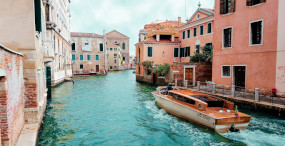
Venice is a city where every corner seems to tell a story carved in stone, wood and metal. Among those stories, Venetian doors and façades form a distinctive visual language: they reveal centuries of history, Byzantine, Gothic and Renaissance influences, the fortunes of patrician families and the memory of the craftsmen who carved, painted and assembled these elements. For the photographer—whether hobbyist or pro—details in doors and façades are an invitation to slow down: to study textures, play with light and shadow, and notice the salt stains and restoration marks. This photographic exploration is both a technical exercise and an emotional quest: how do you capture the soul of a city that floats?
Contenu de l'article
This article is a comprehensive, immersive guide aimed at lovers of detail photography. It focuses on famed doors, sculpted portals, ironwork, mosaics, tympana and emblematic façades of Venice. You’ll find exact addresses, opening hours, entrance fees where applicable, and practical tips to help you nail your shots: lens choices, best times to observe, recommended framing, and how to use light and water reflections. We’ll also cover local rules (permits, tripod use, respect for places of worship), the best vaporetto stops, and a few itineraries to combine several photographic subjects into a half-day or full-day route.
Beyond technique, I emphasize how to visually interpret each detail: a door is more than a frame; it evokes social status, security, hospitality and sometimes display. A façade tells you how a house related to the canal and how its owners wanted to be seen from the water. Materials—red marble, Istrian stone, varnished wood, oxidized brass—become subtle palettes. This guide gives you concrete cues to spot the most photogenic elements so you can compose images that capture not just formal beauty but also Venetian atmosphere: humidity, salt, patina and light filtered by gondolas.
I’ve made a point of including monuments and locations that are easy to identify, with exact addresses and the practical info you need to plan your photo outings. Whether you’re after the ornamental doors of the Palazzo Ducale, the inlays and mosaics of Basilica di San Marco, the delicate façade of Santa Maria dei Miracoli or the stone lacework of the Ca’ d’Oro, you’ll find a visual and descriptive map here. Grab your notebook, pack your lenses—wide for full façades, a 50mm for close work, a 90–105mm macro or short tele to isolate carved details—and let the calle, campi and fondamenta of Venice lead you.
Monumental doors: symbols of power and welcome
Among the city’s most famous doors, the Porta della Carta at the Palazzo Ducale remains a masterpiece of Gothic sculpture. Located on the north side of the Palace, it was created in the 15th century by sculptors Giovanni and Bartolomeo Bon. Its exact address is Palazzo Ducale (Doges’ Palace), Piazza San Marco, 1, 30124 Venezia VE, Italy. The palace is generally open from 09:00 to 19:00 (last admission around 18:00); the standard admission for the museum circuit (including the Palazzo Ducale) is roughly €25.00 for a combined Museo Correr/Palazzo Ducale ticket (prices vary with season and exhibitions). The Porta della Carta presents a striking contrast between carved registers—angels, saints, the kneeling Doge—and the palace’s serrated architecture; it photographs best early in the morning when low light sculpts the reliefs.
 Click here to book priority access to the Doge’s Palace
Click here to book a visit to St. Mark’s Basilica and the Campanile

Another remarkable door is that of Basilica di San Marco: the western and southern portals are adorned with tessellated mosaics and carved tympana. Located at Piazza San Marco, 328, 30124 Venezia VE, the basilica is usually open between 09:30 and 17:00 outside of mass times (hours vary by season). Entrance to the basilica is often about €5.00 (there are separate tickets for the Museum and the Pala d’Oro, about €3–6 extra). The Byzantine portals benefit from a slight low-angle shot to include mosaics and lintels—always while respecting quiet and prayer zones.

The Scuola Grande di San Rocco (Address: Campo San Rocco, San Polo 3052, 30125 Venezia VE) has a finely carved wooden door that announces interiors decorated by Tintoretto. Generally open from 09:30 to 17:30, entry is about €10.00. For doors like this, isolate the wood grain and the patina of the hardware, shooting with lateral light to bring out the veins and reliefs.
Practical tip: when photographing doors on busy buildings, be mindful of pedestrian traffic and avoid blocking access. If you want tripod shots, check first if it’s allowed—some tourist or religious sites prohibit tripods without permission. Bring a small articulating mount or a folding monopod if you need stability without getting in the way.
Venetian façades: stone, marble and stone lacework
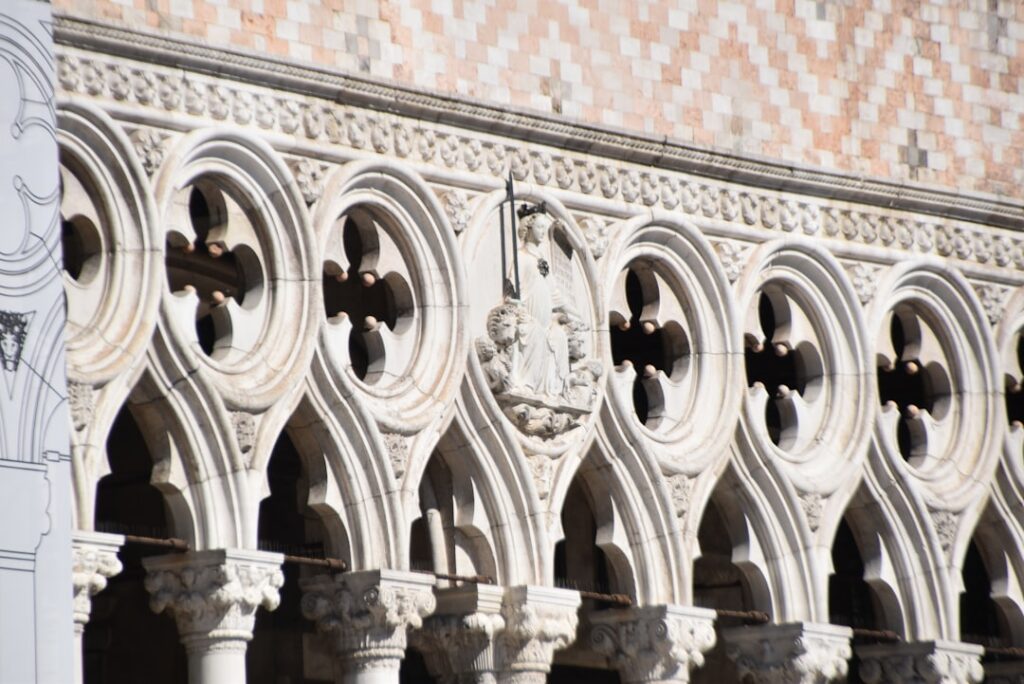
The façades of Venetian palaces are a festival of materials and influences. Take the Ca’ d’Oro (Galleria Giorgio Franchetti alla Ca’ d’Oro), Campo Santa Sofia, Cannaregio 3932, 30121 Venezia VE. This Gothic palace on the Grand Canal is famous for its stone lace, openwork balconies and arcading patterns. The gallery is usually open from 10:00 to 18:00, closed on Mondays; admission is around €8.00. The façade seen from the Grand Canal is an ideal subject at sunset when Istrian stone catches warm tones and reflections break on the water.
Another example is the façade of the church of Santa Maria dei Miracoli, Campo Santa Maria dei Miracoli, 30122 Venezia VE, a masterpiece of polychrome marbles and reliefs. Typically open from 09:00 to 12:00 and 14:00 to 18:00, entrance may be free or require a small contribution of about €3.00 (it varies by day and services). Shoot the façade in the morning to take advantage of soft light that enhances the polychrome marbles: move in to isolate inlays or step back for a full vertical composition.

The variety of façades extends beyond grand palaces: wandering the sestieri (districts) you’ll find historic shops whose signs and storefronts are worth a detour—think old drugstores and silk shops in San Polo or the colourful façades of Dorsoduro. Note the frequent use of Istrian stone (white-grey), Veronese red marble, and varnished woodwork that reveals warm nuances when light reflects off it.
Technical tip: to photograph an entire façade without heavy distortion, use a moderate wide-angle up to 24mm on full-frame, but avoid extreme wide angles that skew verticals. For sharp isolated details (mouldings, gargoyles, keystones), a short telephoto (85–135mm) or a macro lens will help isolate textures. Consider reflections in the canal: a slight shift and moderate polarization can reveal layers of color in the water and reduce harsh glare.
Portals, ironwork and the artisan’s touch
Venetian ironwork—knockers, grilles, strap hinges—is often overlooked by hurried visitors, yet it makes for rich detail photography. For example, the entrance of the Fondaco dei Tedeschi (DFS), Fondamenta San Marco, 2893, 30124 Venezia VE, features metallic elements that echo the site’s mercantile past. Today the Fondaco is known for its shops and rooftop terrace (access often free but sometimes by reservation); its façade and entrance are great for close compositions.

The artisan’s hand is visible in forged hinges, old locks and reliefs on bronze fittings. The entrance to Chiesa di San Zaccaria, Campo San Zaccaria, 30122 Venezia VE, for instance, displays Gothic ironwork against a backdrop of Istrian stone: morning or late-afternoon side-lighting brings out the shadow play created by the forging.

To capture these elements, get close while keeping an angle that shows how they sit within the door: a full close-up of a handle can feel flat without the wooden texture behind it. Use a shallow depth of field (f/2.8–f/5.6 depending on distance) to isolate the ornament while preserving a recognizable background.
Be mindful of constraints: some private doors are in courtyards or private property—do not enter without permission. If a door is behind a gate, work with a longer focal length (100–200mm) to compose without crossing boundaries. And remember, Venetian knockers can be very heavy; they make excellent subjects for black-and-white images that emphasize texture.
Themed photo routes: combining places and timing
Organizing your outings into themed routes maximizes your chances of getting coherent, high-quality images. Here are three practical itineraries with addresses and suggested times to optimize light and access.
-
« Official Grandeur » route — Start at Piazza San Marco:
- Palazzo Ducale, Piazza San Marco, 1, 30124 Venezia VE — Open 09:00–19:00, approximate ticket €25.00.
- Basilica di San Marco, Piazza San Marco, 328, 30124 Venezia VE — Open 09:30–17:00, approx. €5.00 for basilica entry.
- Fondaco dei Tedeschi, Fondamenta San Marco, 2893, 30124 Venezia VE — book the rooftop for early morning or sunset.
Head out very early (sunrise) to avoid crowds and make the most of soft light on the Porta della Carta and the basilica mosaics.
-
« Gothic & Canal » route — Cannaregio and the Grand Canal:
- Ca’ d’Oro, Campo Santa Sofia, Cannaregio 3932, 30121 Venezia VE — Open 10:00–18:00, ticket approx. €8.00.
- Riva del Carbon, near the Ponte di Rialto — façades of shops and merchant houses.
- Ponte di Rialto, 30125 Venezia VE — photogenic at sunrise or late in the day.
In the morning, side-light on the Grand Canal façades creates beautiful contrast; Ca’ d’Oro is best photographed from a small boat or the opposite bank.
-
« Intimacy & Marbles » route — Dorsoduro and San Polo:
- Santa Maria dei Miracoli, Campo Santa Maria dei Miracoli, 30122 Venezia VE — Open 09:00–12:00 and 14:00–18:00, contribution ~€3.00.
- Chiesa di San Polo and the small streets around it for colorful doors.
- Scuola Grande di San Rocco, Campo San Rocco, San Polo 3052, 30125 Venezia VE — Open 09:30–17:30, ticket approx. €10.00.
Late afternoon is ideal for photographing polychrome marbles and the small lookout features on façades.
Getting around tip: use the ACTV vaporetto network—single ticket roughly €8.00 (valid 75 minutes); day passes are available (24h, 48h, 72h) with graduated pricing. Key stops for these routes include San Marco (San Zaccaria), Rialto, Ca’ d’Oro (Guglie/Castello depending on route), and Riva degli Schiavoni for access to the Fondaco/Rialto.
Photographic techniques and local tips
Detail photography in Venice calls for an adapted technical approach and respect for places. Here are concrete tips tried and tested by street and architectural photographers:
- Lens choices: moderate wide-angle (24–35mm) for full façades, 50mm for close work and 85–135mm or macro to isolate ornaments. A 90–105mm macro is ideal for ironwork and mosaics.
- Timing: sunrise (between 05:30 and 07:30 depending on the season) and the blue hour at sunset offer rich tones. Mid-morning creates sharp shadows that sculpt reliefs—useful for doors and high-relief sculptures.
- Stability: favor a small travel tripod if the site allows it; otherwise a monopod or image stabilization will help keep ISOs low and details crisp.
- White balance: polychrome stones need accurate white balance—test color temperature in manual mode to avoid overly warm or cold casts.
- Filters and polarizers: a polarizing filter reduces unwanted reflections on water and polished marbles; an ND filter helps smooth water in long exposures.
- Permission & ethics: in churches and sacred sites, follow the rules: no flash, no tripod without permission, and keep quiet. Ask permission before photographing private interiors or courtyards.
Click here to book a professional photo session in Venice

Local practical tip: carry a small microfiber cloth and a lens-cleaning spray. Salty air can quickly haze your glass; regular cleaning prevents spots and unwanted reflections. Also wear comfortable, non-slip shoes: Venice is full of stairs, wet paving stones and uneven thresholds.
Rules, prices and useful contacts
Here’s a recap of the places mentioned, with addresses, opening hours and indicative prices (check before you go as they can change with season and exhibits):
- Palazzo Ducale (Doges’ Palace) — Address: Piazza San Marco, 1, 30124 Venezia VE. Hours: 09:00–19:00 (last admission 18:00). Indicative price: €25.00 combined ticket. Official sites for reservations and updated hours: museiciviciveneziani.it or veneziaunica.it.
- Basilica di San Marco — Address: Piazza San Marco, 328, 30124 Venezia VE. Hours: 09:30–17:00 (varies by season). Indicative price: €5.00 for basilica entry; additional fees for the Museum and Pala d’Oro. Online booking strongly recommended in high season.
- Ca’ d’Oro (Galleria Giorgio Franchetti) — Address: Campo Santa Sofia, Cannaregio 3932, 30121 Venezia VE. Hours: 10:00–18:00 (often closed Monday). Indicative price: €8.00.
- Scuola Grande di San Rocco — Address: Campo San Rocco, San Polo 3052, 30125 Venezia VE. Hours: 09:30–17:30. Indicative price: €10.00.
- Santa Maria dei Miracoli — Address: Campo Santa Maria dei Miracoli, 30122 Venezia VE. Hours: 09:00–12:00 and 14:00–18:00 (variable). Suggested contribution: €3.00.
- Fondaco dei Tedeschi — Address: Fondamenta San Marco, 2893, 30124 Venezia VE. Rooftop: access subject to reservation; sometimes free or with a small ticket depending on season.
Transport: ACTV vaporetto tickets about €8.00 single (75-minute validity); day passes available at ACTV. Check boat timetables and possible temporary closures (events, exceptional high tides – acqua alta).
Conclusion
Photographing Venetian doors and façades is immersing yourself in a visual language that blends history, art and daily life. The carved portals of the Palazzo Ducale, the Byzantine mosaics of Basilica di San Marco, the polychrome marbles of Santa Maria dei Miracoli and the stone lace of the Ca’ d’Oro are more than pretty subjects: they are open archive pages that light rewrites every day. By studying textures, choosing the right time and the right tools, you can make images that convey Venice’s fragility and beauty—the city that balances on water.
Before you go, remember to prepare: check updated hours and prices, book if needed (especially for Basilica di San Marco and the Fondaco dei Tedeschi rooftop), respect rules in sacred and private places, and adapt your technical choices (lenses, stability, filters) to the visual goal. Above all, wander without a rigid plan: some of the most moving doors and façades are off the beaten path, on peaceful fondamenta where aged wood and oxidized metal tell centuries of lives.
Venice rewards the patient observer: let your eyes linger, note the reflections, listen to the quiet clink of ironwork, and favour quality over quantity. Your photos of doors and façades will become personal archives of the city, witnesses to a fragile heritage that should be photographed—and respected. Happy photographic travels—and may your shots do justice to the poetry of Venetian details.