





Introduction
Venice isn’t just a maze of canals and palazzi around St. Mark’s Square: the archipelago that frames the Serenissima offers an astonishing variety of landscapes, crafts and atmospheres — perfect for photographers looking for diverse subjects. This photo guide to the islands around Venice is designed to help you plan coherent photo days, with practical cues, exact addresses, approximate prices and tips to capture the light, textures and soul of each place. Whether you love architecture, street photography, vivid color or marine sunsets, the islands of Murano, Burano, Torcello, the Lido, Sant’Erasmo, Pellestrina and the cemetery island of San Michele provide complementary settings suited to every photographic genre.
Important reminder before you go: vaporetto logistics (ACTV water buses) and small private connections heavily influence the success of a photo day. Schedules, prices and crowd levels change with the season; in high season, start early to enjoy soft light and avoid the crowds. Bring versatile lenses (24–70mm for context, 70–200mm or an 85mm for portraits and details), a small lightweight tripod for long exposures at sunset and ND/polarizing filters to control reflections and contrast on the water.
This guide is for both well-equipped photographers and travelers shooting with a smartphone: I explain where to stand for the best compositions, which hours to favor, which architectural or craft details deserve your attention, and I give practical info — exact addresses, opening hours and prices — so you can organize visits and bookings. The islands also hide less obvious subjects: fishing nets, glassblowers’ workshops, lacemakers focused in daylight, colorful boats sleeping in canal arms, and the vegetable expanses of Sant’Erasmo that contrast with Venice’s classic image.
Finally, beyond technique, I offer behavioral and respect tips: keep shoots short so as not to disturb artisans, ask permission for tight portraits, avoid private areas and protected gardens, and respect the opening hours of churches and monuments. The goal is to bring back sincere, lasting images that tell each island’s unique story while preserving their authenticity for future generations.
Murano: glassblowing drama and vivid interiors
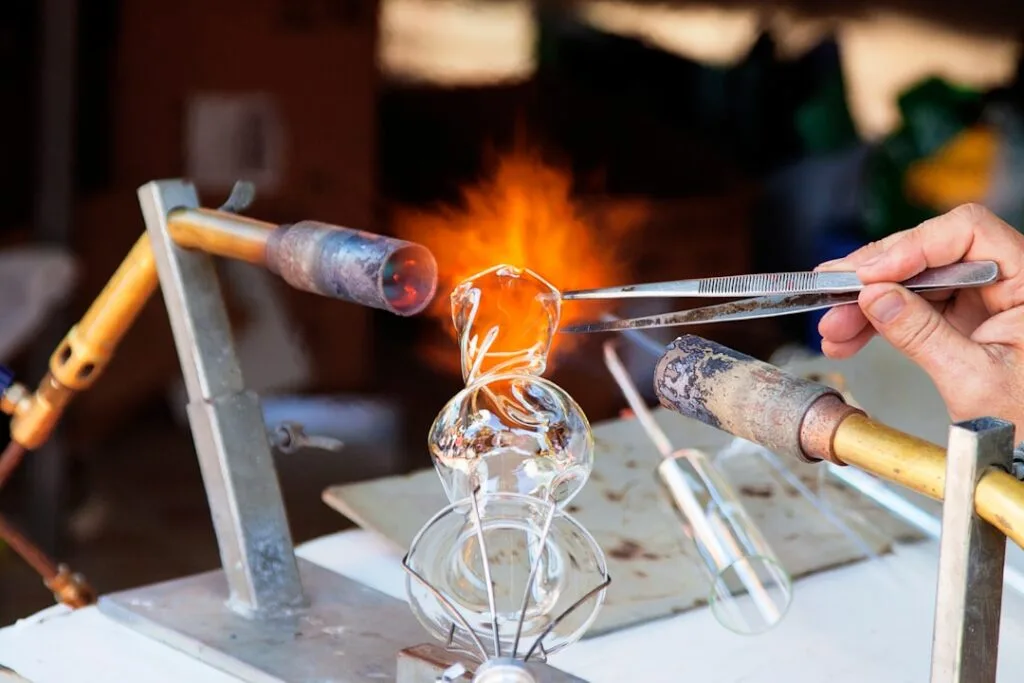
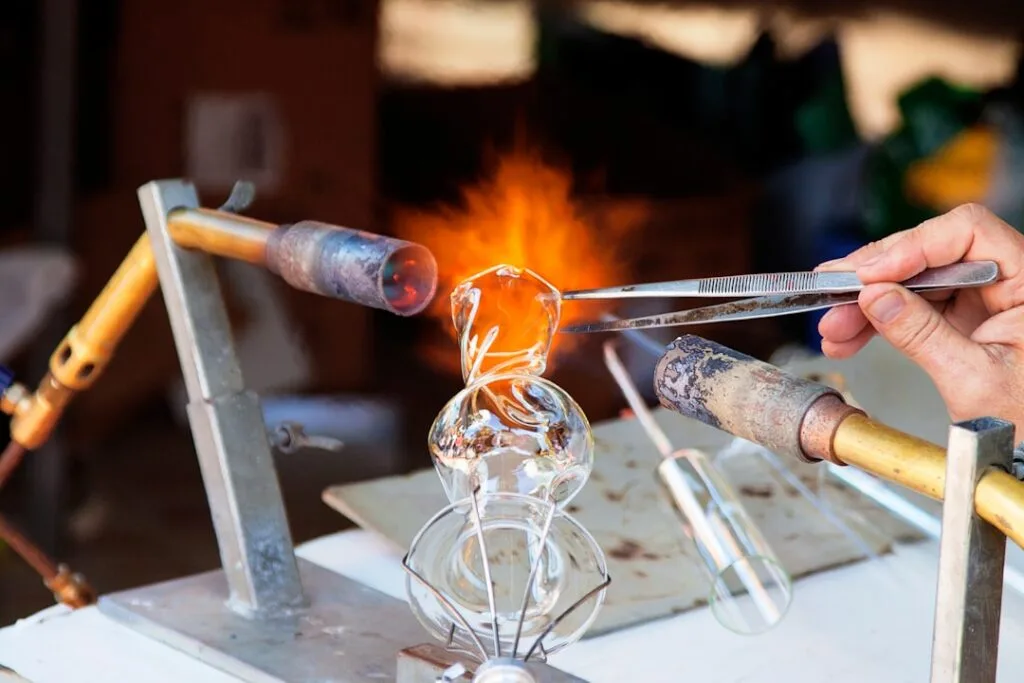
Murano has been synonymous with blown glass since the 13th century. It’s the island to visit for photographing craft in motion: glassblowers at the torch, molten drops, silhouettes framed by flames and translucent pieces playing with light. For a practical starting point, head to the Museo del Vetro (Glass Museum) at Fondamenta Giustinian, 8, 30141 Venezia VE. Exact address: Museo del Vetro, Fondamenta Giustinian, 8, 30141 Venezia VE. Opening hours: typically open daily from 10:00 to 17:00 (may be closed on Mondays off-season); approximate price: €9–€12 for adult entry. Check seasonal hours before you visit.
Near the museum, the Venini workshop and furnace (Fondamenta Giustinian) sometimes hold public demonstrations. Photograph master glassblowers in profile against the fiery light for dramatic silhouettes, or shoot close-ups of glowing tools and beads of molten glass. Shops around Fondamenta Vignole and Canal Vivarini display rich textures and colors — perfect for bold, graphic compositions.
Photo tips: use a fast shutter (1/250s or faster) to freeze splashes and quick movements of the blowers; set ISO between 200 and 800 depending on indoor light. A 50–85mm lens is ideal to isolate artisans’ gestures without intruding on their workspace; always ask permission before getting close. Colored glass backgrounds make beautiful bokeh when you open the aperture (f/1.8–f/2.8).
Demo times: many workshops run sessions mid-morning and late afternoon (check locally). Demo prices: some glassworks offer free demos; others charge €5–€15 for a guided visit or a beginner workshop (glassblowing workshops for visitors — booking recommended). Beware of overly vivid shop lighting: when editing, consider slightly reducing saturation to avoid an artificial, oversaturated glass look.
Practical note: access to Torcello is via ACTV vaporetto (mainly line 12) from Fondamenta Nuove or Murano; check connections and timetables. Bring water — services are limited and cafés may close early off-season. Respect the quiet of the place, especially near religious sites. If you visit in autumn or winter, bring windproof clothing — the lagoon can be cold and damp.
 Click here to join a glassblowing workshop
Click here to book a Murano glassblowing workshop for beginners
Burano: a color explosion and village portraits
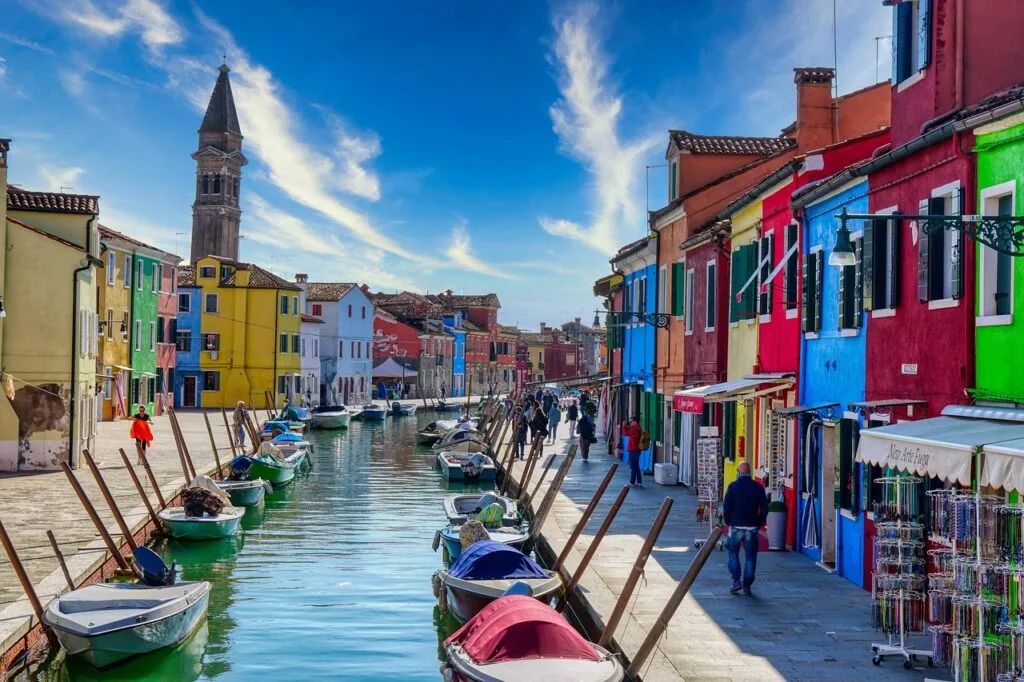
Burano is the most photogenic island for color: brightly painted facades, narrow canals and drying fishing nets create an immediate, recognizable visual world. The island’s heart is Piazza Galuppi — named after composer Baldassarre Galuppi — and the Chiesa di San Martino Vescovo. Main address: Piazza Galuppi, 30142 Burano, Venezia VE. Don’t miss the Museo del Merletto (Lace Museum) at Fondamenta del Museo, 11, 30142 Burano VE; usual hours: 10:00–17:00; approximate price: €3–€6.
For photography, favor the warm morning window (8:00–10:00) and late afternoon for low light that intensifies color. The leaning bell tower of Chiesa di San Martino makes an excellent focal point for a classic composition. Then wander along the fondamenta (quays) and the side alleys for scenes of daily life: outdoor cafés, laundry hanging, fishermen mending nets, and rows of colorful boats moored at the water’s edge.
Practical tips: use a wide-angle lens (24–35mm) to capture entire facades and the perspective of the lanes, and bring an 85mm for intimate portraits of locals or detailed shots of lace. Burano attracts many visitors; for clean images, head to side streets or return at dawn for empty, peaceful scenes. Cafés on Via San Mauro and Via Galuppi are perfect for a coffee break and candid local photography.
Prices and services: lace ateliers in the area sometimes offer free demos; others charge €2–€5 or run paid workshops (€20–€50 depending on length). When photographing people, be respectful and ask for consent; prefer natural light to do justice to vivid colors rather than using a flash that could flatten the tones.
Click here to book a boat trip to Murano and Burano
Click here to book a boat trip to Murano and Burano
Torcello: history, silence and the Basilica of Santa Maria Assunta
Torcello is an island-museum: sparsely populated and wilder, it feels like a scene from a medieval painting. It’s ideal for contemplative photography. One major highlight is the Basilica di Santa Maria Assunta (Basilica of Santa Maria Assunta). Address: Piazza Santa Maria Assunta, 30142 Torcello, Venezia VE. Opening hours: generally open around 10:00 to 17:00; entry fee: €2–€6 (varies by season and options).
The basilica houses 12th-century mosaics with incredible chromatic richness: to photograph them, favor a medium prime (35–50mm) and a discreet tripod if allowed. Natural light filtered through windows yields subtle tones: try low ISOs and a moderate aperture (f/5.6–f/8) to maximize detail. Nearby you’ll find the Trono di Attila (an ancient stone seat) and the bell tower — compose wide shots that pair architecture with surrounding marshes and canals.
Torcello is also great for long exposures at dusk: its calm lets you capture the light transition with longer shutters to smooth the water and isolate reed silhouettes. Explore dirt paths away from the main piazza; isolated benches, ruined wall fragments and open lagoon views offer opportunities for atmospheric, minimalist images.
Practical tips: access Torcello via ACTV vaporetto (mainly line 12) from Fondamenta Nuove or Murano — check the connections and timetable. Bring water; services are limited and cafés may close early off-season. Respect the peacefulness of the place, especially around sacred sites. In autumn or winter, pack windproof clothing — the lagoon can be chilly and damp.
Click here to book a boat trip to Murano, Burano and Torcello
Click here to book a boat trip to Murano, Burano and Torcello
San Michele, Sant’Erasmo and Pellestrina: rural contrasts and working islands
Beyond the famous islands, three lesser-photographed spots offer complementary textures and subjects: the cemetery island of San Michele, Sant’Erasmo the vegetable garden, and the long sandy ribbon of Pellestrina. Each has a distinct atmosphere and logistical challenges to prepare for.
San Michele (Isola di San Michele) is the cemetery island where famous and anonymous rest side by side. Access address: Isola di San Michele, 30121 Venezia VE (main access by vaporetto from Fondamenta Nuove). Opening hours: the cemetery is typically open 07:30–17:00 in winter and later in summer; entry is free for visitors, though some areas may be restricted. Photography: favor respectful, discreet compositions — plays of shadow on tombstones, cypresses and funerary chapels, marble and bronze textures. The palette here is sober: blacks, greys and deep greens — perfect for black-and-white work.
Sant’Erasmo is Venice’s vegetable garden: large cultivated plots, vineyards, drainage canals and huts that feel lifted from rural scenes. Access address: Isola di Sant’Erasmo, 30142 Venezia VE (vaporetto link from Fondamenta Nuove). Hours: there are no fixed monument hours, but farms and local markets operate during the day; free entry. Photography: agricultural landscapes, crop fields, fishermen and mooring lines — great for documentary work and close-up shots of local produce (asparagus, radishes, etc.). Bring a macro lens if you want detailed shots of plant textures.
Pellestrina is a long barrier island south of Venice, known for beaches and fishing villages. Landmarks: the village of Pellestrina (località S. Pietro in Volta and Sottomarina at the ends) and the beach at Fondamente Nove on the lagoon side. Generic landing address: Lido di Pellestrina, 30015 Pellestrina VE. Hours: crossings run via local ACTV services; there aren’t opening hours as such, but check service frequency. Photography: long dune lines, rows of boats, fishermen repairing traps. Sunsets over the sea from the eastern coast are stunning for silhouettes and golden reflections.
Practical tips: on these islands, cycling is often the most practical way to get around (rentals usually available at the dock). Bring paper maps or an offline GPS — mobile coverage can be patchy in rural areas. Respect private property and don’t enter gardens or farms without permission. If you plan to photograph farmers or fishermen, always ask and, if possible, offer a print or a digital copy as thanks.
Click here to book a traditional boat tour to Pellestrina
Click here to book a traditional boat tour to Pellestrina
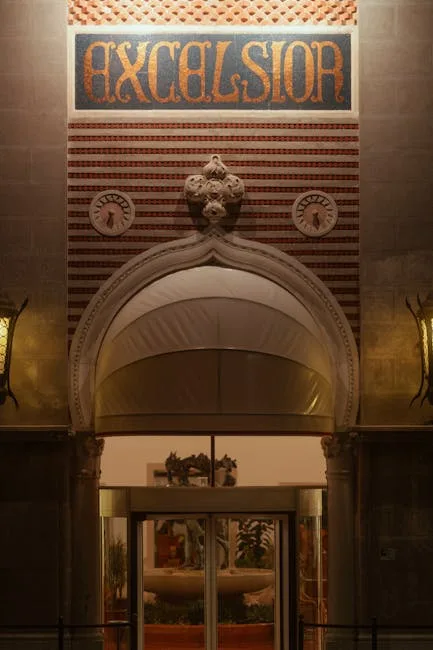
Lido di Venezia: boulevards, beaches and cinematic flair
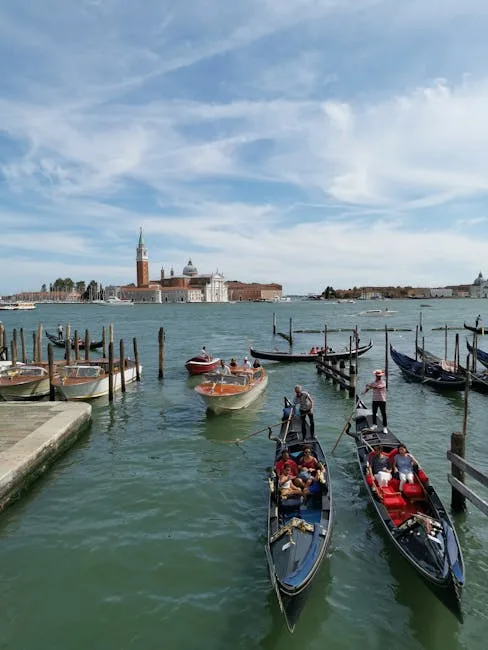
The Lido of Venice is the island of beaches and Belle Époque style, famous for the Venice Film Festival. The main artery is Gran Viale Santa Maria Elisabetta, which leads to historic hotels and elegant villas. Primary arrival address: Gran Viale Santa Maria Elisabetta, 30126 Lido VE. Photo spots: the Hotel Excelsior (Viale Gabriele D’Annunzio, 1, 30126 Lido VE), the seafront pavilions along the Lungomare and the spiaggia (beach) at sunset. The Lido is ideal for contrasts between refined architecture and vast marine horizons.
Hours: the seafront is freely accessible; some hotels, the casino or museums have varied opening times (check individually). Prices: access to the public beach is free, but private beach clubs with sunbeds and umbrellas typically charge €10–€30 per day depending on the season. The Casinò Municipale di Venezia (Piazzale S. Maria Elisabetta, 30126 Lido VE) has specific hours and may require dress codes for evening entry.
For photos, the Lido offers great morning horizon shots and long perspectives along Lungomare Gabriele D’Annunzio. Use longer focal lengths (100–200mm) to isolate silhouettes of swimmers and walkers, and a wide-angle to capture elegant facades and the depth of the seafront. During the Venice Film Festival (late August–early September), the atmosphere turns cinematic — watch for posters and red carpets for busy urban scenes.
Practical tips: vaporetto shuttles serve the Lido frequently from Salute and Tronchetto. In high season, parking and private beaches fill up quickly — book ahead if you want a specific spot. For clean images, sunrise on the beach when the waves and salty air create hazy atmospheres is golden hour magic. Don’t forget equipment protection: sand and sea spray can damage lenses.
Click here to book a private beach day from St. Mark’s
Click here to book a private beach day from St. Mark’s
Final practical tips for photographing the islands
Plan your travel around ACTV lines and private boat links: check the official ACTV site for up-to-date timetables and fares, and consider round-trip tickets to save time. A 75-minute vaporetto ticket usually costs around €8 (indicative); day passes (24h/48h/72h) are available and recommended if you plan to hop between islands (approximate prices: 24h = €25–€30, 48h = €35–€40). For trips outside ACTV hours, look into private water taxis and organized tours — faster but often pricier (expect €30–€100 depending on distance and group size).
Recommended gear: a versatile camera body, a 35–50mm prime for portraits and architecture, a 16–35mm wide-angle for lanes and landscapes, a 70–200mm tele for isolating subjects, and a small tripod for low light and long exposures. Don’t forget extra memory cards, spare batteries and a rain cover to protect gear from spray. For smartphone shooters: favor a dual-focal setup (standard and tele), shoot RAW if available and bring a small gimbal for video.
Respect and ethics: some places (churches, museums, private workshops) ban flash and require discretion. Obey signs and rules, always ask permission when photographing people and offer a friendly word or smile. Think about security: don’t leave equipment unattended and avoid shooting at night in isolated areas alone.
To get the most from your images, aim to tell a story: combine wide shots, portraits and details (textures, hands, tools) to build a coherent series. Take notes (or use an app) to record time and place — it’ll make captioning and sequencing easier when you get home.
Click here to buy a Venice City Pass including museums and transport
Click here to buy a Venice City Pass including museums and transport
Conclusion
The islands around Venice offer rare diversity: Murano for live glass art, Burano for color and charm, Torcello for history and quiet, the Lido for an elegant seafront, Sant’Erasmo and Pellestrina for agricultural and marine landscapes, and San Michele for more introspective images. Each reveals distinct photographic subjects that, when combined, create a rich visual narrative of the Venetian lagoon.
Organizing your days around vaporetto timetables, golden hours and craft demonstrations will maximize your chance of returning with powerful images. Practical details — exact addresses, opening times and prices — will help you plan and book when needed. On the ground, favor curious respect: ask for permissions, offer a human exchange and be mindful of the fragility of these islands, both environmentally and culturally. A traveling photographer becomes a witness and an ambassador, able to restore an island’s soul while helping preserve it.
Whether you have a single day or a longer stay, take time to observe, revisit the same spot at different hours and vary focal lengths to build a cohesive series. The best images often come from patience and a careful eye: let the lagoon lead you, follow its changing light and the stories told by monuments, workshops and locals. Enjoy your photographic journey around Venice — and may your memory card be full of authentic, memorable images.