





Introduction
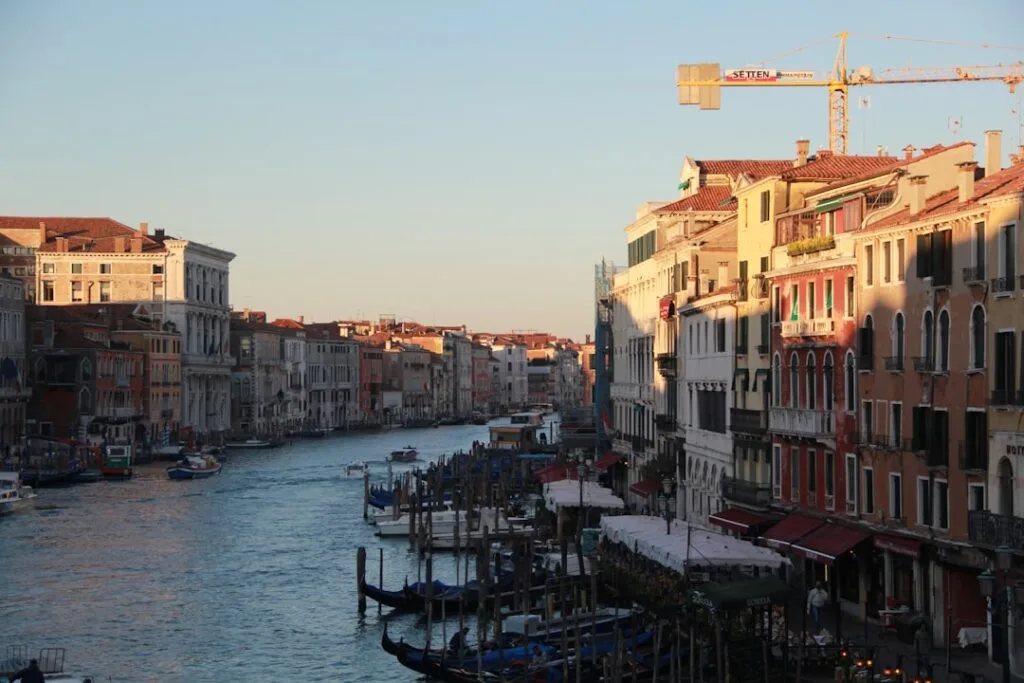
Venice isn’t just a city to explore on foot: it’s first and foremost a city of water, a web of canals, islands and lagoons where public transport runs mostly by boat. Among the many ways to get around, the vaporetto — the ACTV-operated water bus — is the essential tool for the savvy traveler. Grab a map, learn a few key stops and you’ll have almost total freedom to hop between nearby islands, avoid the crowds at Piazza San Marco, and enjoy Grand Canal views you only get when you’re gliding on the water.
In this introduction we’ll cover the basics: how tickets work, main departure points, and why certain routes deserve your attention. Buying an ACTV ticket (Azienda del Consorzio Trasporti Veneziano) is your first step. At the time of writing, a single ticket costs €9.50 and allows transfers for 75 minutes. Tourist passes are often a better deal: 24 hours €25, 48 hours €35, 72 hours €45 and 7 days €70. Prices can change — always check the official ACTV site or ticket outlets. Tickets are sold at ACTV kiosks, ticket machines at major stops (Piazzale Roma, Ferrovia), some tobacco shops (Tabacchi) and via the official mobile app.
Vaporetto lines are split between “urban” routes (numbered 1, 2, 4.1, 4.2, 5.1, 5.2, 6, etc.) which serve the Grand Canal and nearby lagoon, and “suburban” routes (3, 12, 13, 14, etc.) that head out to Murano, Burano, Torcello and the Lido. Some lines are fast (fewer stops) and favor a direct connection between Piazzale Roma, Santa Lucia station and San Marco; others are slower, follow the Grand Canal and offer superb views but take more time. During peak months (April to October) expect crowded boats, especially on line 1. Comfort varies by vessel type: open boats, covered boats, or double-deckers depending on season and route.
Finally, punctuality and frequency: vaporetti generally run very early (around 5:00) until late at night (around 00:30 for most lines), with limited night services on some routes. During high tide (acqua alta) some stops may be altered or closed; ACTV posts real-time notices. Always allow a time buffer before a guided tour, water taxi or train (Venezia Santa Lucia station, address: Fondamenta Santa Lucia, 30121 Venezia VE).
 Click here to buy a Venice City Pass with museums

Line 1 (Grand Canal): the must-do scenic route
For many visitors, line 1 is their first encounter with Venice’s liquid charm. It traces the winding path of the Grand Canal, linking Piazzale Roma to the Basilica Santa Maria della Salute, then San Marco Vallaresso, and in some sections continuing toward the Lido. Unlike line 2 (which is more direct), line 1 stops frequently at the foot of historic palaces: Ca’ Pesaro (Galleria Internazionale d’Arte Moderna, address: Campo Santa Maria Formosa, 30121 Venezia VE), Ca’ Rezzonico (Museo del Settecento Veneziano, Campo San Barnaba, 30123 Venezia VE), and of course the famous Rialto Bridge (Ponte di Rialto, Sestiere San Polo, 30125 Venezia VE).
Take line 1 for a first crossing when the sun skims the façades: morning or evening light brings out the stucco, the patina on the stones and laundry hanging from balconies. Practical note: line 1 is slow and popular; expect to stand when the boat is full. Make sure your ticket is validated — fines for riding without a valid ticket can be hefty. Key stops on this line include: Piazzale Roma (Piazzale Roma, 30135 Venezia VE, the main road access and parking), Ferrovia / Venezia Santa Lucia (Fondamenta Santa Lucia, 30121 Venezia VE, the train station), Rialto (Ponte di Rialto, 30125 Venezia VE), San Marco Vallaresso (Riva degli Schiavoni, 30124 Venezia VE) — this stop drops you closest to the Basilica of St. Mark (Basilica di San Marco, Piazza San Marco, 30124 Venezia VE; opening times vary, often 9:30–17:00; entry to the nave is free, museum visits are paid).
Local tips: ride line 1 outside peak hours (between 10:30 and 15:00 or after 19:00) to snag a seat on the right-hand side heading from Piazzale Roma → San Marco for the best views. If you’re in a hurry, choose line 2 — it’s quicker and often less crowded.
Click here to discover the Grand Canal by boat with an expert guide
Lines 12 / 4.1 / 4.2: serving Murano and Giudecca
Murano and the Giudecca are two very different destinations but both accessible via variants of lines 4.1, 4.2 and 12. Murano, famous for its blown glass, lies to the north of Venice and usually requires a change at Fondamente Nove (Fondamenta Nove, 30122 Venezia VE). Boats to Murano call at stops like Murano Faro (Fondamenta Garibaldi, 30141 Murano VE) and Colonna. If you want to watch a glassblowing demo, head to the Museo del Vetro (Museo del Vetro, Fondamenta Giustinian 10, 30141 Murano VE; typically open 10:00–17:00; entry around €10, check locally).
The Giudecca, on the opposite side of the main canal, is served by lines 4.1 and 4.2 among others. It offers a fantastic view back at the rear façade of St. Mark’s Square and the famed Hilton Molino Stucky Venezia (Giudecca 810, 30133 Venezia VE), plus quieter walks along its waterfront. Line 4.1 runs in one direction and 4.2 in the opposite, skirting the southern perimeter of Venice and making circular trips convenient.
Practical tip: line 12 is a handy direct link between some outer neighborhoods and Murano from Piazzale Roma. Check frequencies: off-season boats to Murano can be spaced out (every 30–60 minutes). For glass workshops, aim for the morning (10:00–12:30) when artisans are still working. On Murano, avoid buying very expensive items at tourist stalls without an authenticity certificate; prefer studio shops marked “Vetro artistico Murano”.
Click here to attend a glassblowing demonstration in Murano
Lines 5.1 / 5.2 and 14: Burano, Torcello and the lagoon’s soul
To truly explore the Venetian lagoon archipelago, lines 5.1/5.2 and 14 are your best allies. They serve Fondamente Nove, then split toward Burano (famous for its colorful houses and lace-making) and Torcello (a very peaceful island with medieval history visible in the Basilica Santa Maria Assunta). The main stop for Burano is Burano (Via Galuppi, 30142 Burano VE), while Torcello usually disembarks near the cathedral landing (Isola di Torcello, 30142 Torcello VE).
Burano is like a living painting: brightly painted façades, lined-up boats, small cafés serving famous bussolà cookies and fresh seafood dishes. The Lace Museum (Museo del Merletto, Via Giudecca 188, 30142 Burano VE) tells the story of lace-making; opening times and prices vary seasonally. Torcello, by contrast, feels almost mystical: the Basilica di Santa Maria Assunta (Isola di Torcello, 30142 Torcello VE) has remarkable Byzantine mosaics and the island feels like a peaceful escape from the crowds. Entry to Torcello remains modest (often around €3 for the church, prices subject to change).
Practical advice: leave early if you want to avoid the tour groups that arrive in the afternoon from Venice. In Burano the main hub is Via Baldassare Galuppi; that’s where cafés and shops cluster (address Piazza Galuppi, 30142 Burano VE). For Torcello bring water and comfortable shoes: the island is small but paths can be sandy. Also check return schedules: some services back to Venice stop operating earlier in the evening than the urban lines.
Click here to visit Murano and Burano on a half-day boat trip
Line 2 and faster alternatives: save time without missing the view
Line 2 is often the best option if you want to get quickly between Piazzale Roma, Santa Lucia station and St. Mark’s Square. Unlike line 1, line 2 makes fewer stops and includes some direct, faster services. It’s the choice for travelers in a hurry, those connecting to the airport via bus + vaporetto, or anyone with tight train connections.
Besides line 2, other fast options include seasonal express services to the Lido, which serve the beach (Gran Viale Santa Maria Elisabetta, 30126 Lido VE) and the film festival site (the Venice Film Festival, Mostra del Cinema di Venezia, takes place at the Lido each year). For a private and more direct transfer, water taxis are convenient but pricey: expect fares between €80 and €120 for a standard trip from Piazzale Roma to San Marco (prices vary by distance, luggage and time).
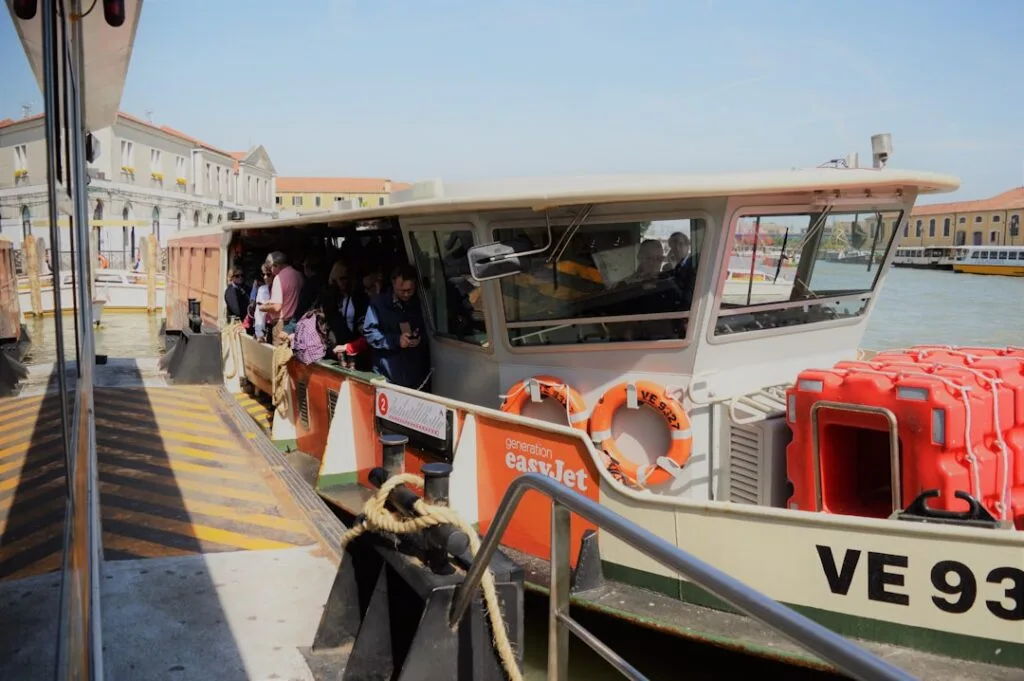
Additional tips: validating your ticket is mandatory — look for the yellow or metallic validators on the docks; insert your ticket or scan your digital pass. Controls are frequent and fines are high (several dozen euros). For a more comfortable experience, travel during off-peak times (early morning or late afternoon). In summer bring sunscreen and a water bottle; in autumn/winter a light waterproof jacket can help against spray and acqua alta.
Click here to book a private beach day at the Lido
Local practical tips to master the vaporetto
Here’s a list of practical tips to keep your vaporetto journeys smooth and enjoyable:
- Always validate your ticket: before boarding look for the yellow validator and pass your ticket through. Controls can be random but strict.
- Prefer passes if you move around a lot: a 48-hour or 72-hour pass often pays off if you plan to visit Murano, Burano and take several Grand Canal trips. Skip the queues and buy the pass online directly by clicking here.
- Learn to read stop maps: docks display lines and destinations; ask the captain if in doubt — many speak English and several speak French.
- Rush hours: avoid 9:00–11:00 and 17:00–19:00 on line 1 if possible; take line 2 if you’re in a hurry.
- Luggage: if you have suitcases, start from Piazzale Roma or Ferrovia; the docks are designed to help transit passengers.
- Walking and connections: some routes (e.g. changing at Fondamente Nove for Burano/Murano) require short walks along the docks. Wear non-slip shoes when the docks are wet.
- Safety: don’t lean too far over the boat edges and watch your belongings on crowded stops.
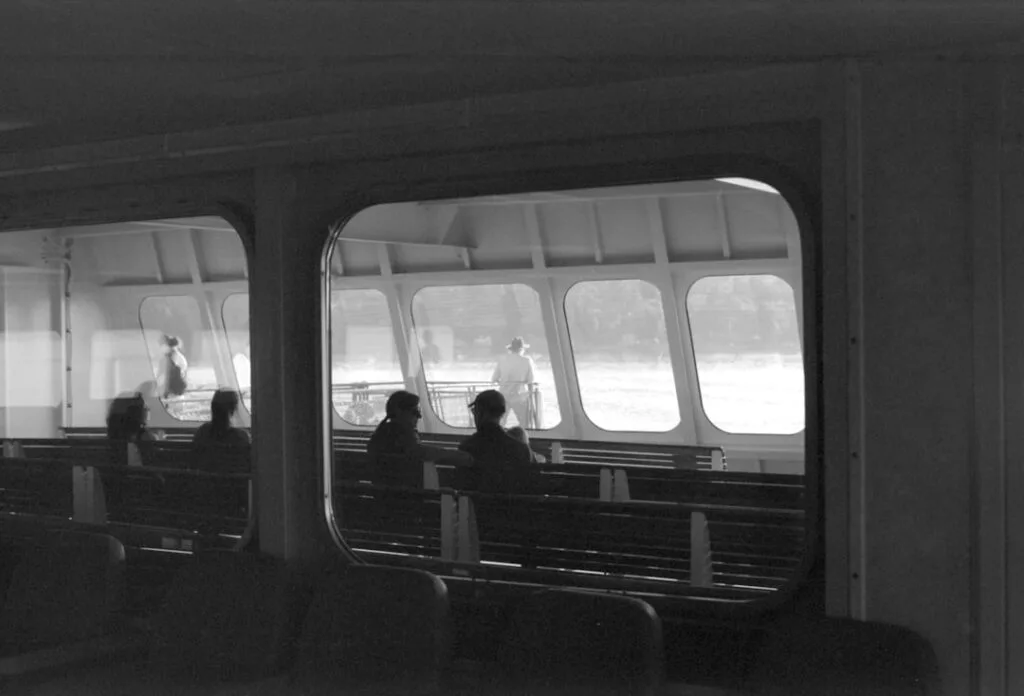
Lastly, think local: the vaporetto is as much a means of transport as it is a social scene. Venetians use it daily to commute, shop, or take their kids to school. A small courtesy: let people get off before you board, and use the ride to slowly take in the city as it unfolds, façade by façade.
Conclusion
Getting to grips with vaporetto lines opens a moving travel guide: the spine of your exploration is the corridor between Piazzale Roma, Santa Lucia station and St. Mark’s Square, plus the lines out to Murano and Burano and faster services like line 2. With smart planning — choosing the right ticket, sticking to schedules, and using express services when time is tight — you can turn a canal crossing into one of the highlights of your trip. Stops are more than GPS points: they’re invitations to wander, doors to museums like the Museo del Vetro in Murano (Fondamenta Giustinian 10, 30141 Murano VE), seafood lunches on Burano (Via Baldassare Galuppi, 30142 Burano VE), or panoramas of the Basilica di San Marco (Piazza San Marco, 30124 Venezia VE).
Click here to book entry to the Murano Glass Museum
Don’t forget: practical details — fares (single ticket €9.50, day pass €25, etc.), timetables (services from early morning to late at night), and addresses — can change. Before you go, check the official ACTV website, download their app or visit a tourist information point (e.g. Ufficio Informazioni in Piazza San Marco) to get up-to-date timetables and notices about disruptions from tides or works. And above all, give yourself time to savor it: some longer trips will offer photographic and emotional moments you simply can’t capture any other way. The vaporetto is more than transport: it’s Venice’s liquid mirror.